

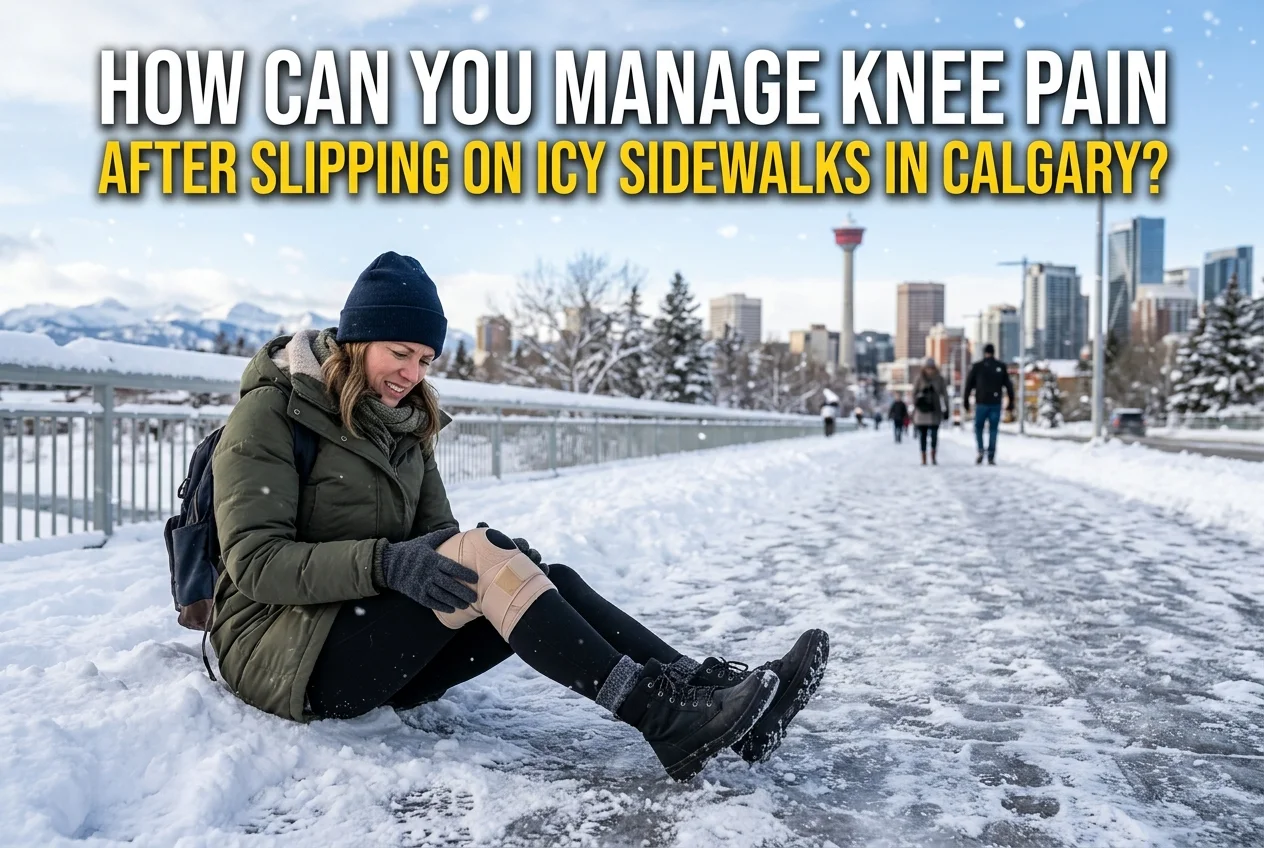
How Can You Manage Knee Pain After Slipping on Icy Sidewalks in Calgary?
Table of Contents
Introduction
Slipping on an icy sidewalk can cause unexpected knee injuries, particularly when your leg twists or absorbs the impact of a fall. You may experience swelling, stiffness, tenderness, or difficulty walking and climbing stairs. Understanding how to manage knee pain after slipping on icy sidewalks can help you take appropriate steps towards recovery. With Knee Pain Physiotherapy in Calgary, you can address movement restrictions, rebuild strength, and improve knee stability through a structured rehabilitation programme.
Why Does Your Knee Hurt After Slipping on an Icy Sidewalk?
When you slip, your knee may twist, bend awkwardly, or absorb the impact of your fall. This can affect the ligaments, muscles, tendons, and cartilage supporting the joint.
Common injuries include:
- Knee Sprains: Ligaments, particularly the MCL, may stretch or tear, causing swelling and instability.
- Meniscus Injuries: Twisting under pressure can damage knee cartilage, causing pain, stiffness, or locking.
- Patellar Injuries: Landing on your kneecap may cause bruising or inflammation.
- Muscle Strains: Sudden muscle contractions can strain the quadriceps, hamstrings, or calf muscles.
- Bone Injuries: A hard impact may cause fractures around the kneecap or lower thigh.
Knee pain after slipping on icy sidewalks does not always indicate a serious injury, but persistent symptoms should be assessed.
Can knee pain develop a few hours after slipping on ice?
Yes. Swelling and inflammation may develop gradually after a fall. Monitor your symptoms, avoid aggravating activities, and seek assessment if discomfort persists or worsens.
What Are the Common Symptoms of a Knee Injury After a Winter Fall?
Symptoms depend on how you landed and which knee structures were affected. Common signs include:
- Swelling around the kneecap or joint.
- Pain when bending or straightening the knee.
- Bruising and tenderness.
- Difficulty bearing weight.
- Stiffness after resting.
- Knee instability or reduced mobility.
- Discomfort when climbing stairs.
A twisted knee after a sidewalk fall may also cause pain along the inner or outer joint.
Severe pain, substantial swelling, a visible deformity, the inability to bear weight, or a locked knee should all be treated right away because they could be signs of a serious injury.
Can a knee injury affect my ability to climb stairs?
Yes. Ligament, cartilage, or muscle injuries can make stair climbing difficult. Physiotherapy can help restore knee strength, mobility, and control through suitable rehabilitation exercises.
How Can You Manage Knee Pain After Slipping on Icy Sidewalks at Home?
The first few days after a fall are important for protecting your knee and managing discomfort. If there are no signs of serious injury, consider these measures.
1. Reduce Activities That Aggravate Your Knee
Avoid running, jumping, deep squats, and unnecessary stair climbing. Limit painful activities while maintaining gentle movement as tolerated.
2. Apply Cold Therapy
For fifteen to twenty minutes, apply a towel-covered cold pack. Ice should never be applied straight to your skin.
3. Use Gentle Compression
An elastic bandage may help control swelling. Keep it comfortable and remove it if you experience numbness or tingling.
4. Elevate Your Leg
Rest with your injured leg supported on pillows to help reduce swelling.
5. Consider Appropriate Knee Support
A brace may provide stability depending on your injury. Knee bracing after fall Calgary recommendations should follow a healthcare professional’s assessment.
These measures can help you manage knee pain after a winter fall while determining whether further medical care is needed.
Should I continue walking if my knee hurts after a fall?
Avoid activities that increase discomfort. Gentle movement may be appropriate, but difficulty bearing weight requires prompt medical assessment before continuing normal activities.
How Does Physiotherapy Help Treat Knee Injuries After Slipping on Ice?
Once serious injuries are ruled out, knee pain physiotherapy in Calgary can help restore knee movement, strength, and stability.
At East Hills Physiotherapy and Massage, we follow an individualized approach based on your symptoms, mobility, and recovery goals.
1. Movement and Functional Assessment
Your physiotherapist evaluates knee mobility, swelling, muscle strength, joint stability, and walking patterns. They may also assess hip and ankle movements.
2. Manual Therapy
Hands-on techniques help address joint stiffness and soft tissue restrictions. These may include:
- Joint mobilization to improve knee movement.
- Soft tissue mobilization to reduce muscle tightness.
- Range-of-motion techniques to improve flexibility.
- Patellar mobilization when appropriate.
3. Therapeutic Exercises
Exercises help restore knee strength and control. Your programme may include:
- Quadriceps Activation: Improves thigh control.
- Straight Leg Raises: Strengthens quadriceps.
- Hamstring Exercises: Strengthens supporting muscles.
- Glute Strengthening: Improves hip stability.
- Heel Slides: Improves knee mobility.
For knee pain after slipping on icy sidewalks, progress exercises gradually according to your tolerance.
4. Electrotherapy
TENS and other suitable electrotherapy techniques may help manage discomfort alongside active rehabilitation.
5. Gait and Balance Retraining
Balance exercises, controlled weight shifts, and walking practice help improve coordination, stability, and confidence when moving.
6. Massage Therapy and Soft Tissue Techniques
Massage therapy may reduce muscle tension in the quadriceps, hamstrings, and calf muscles. Graston Technique may also help address suitable soft tissue restrictions.
Treatment techniques are selected according to your injury and recovery stage.
How long should I apply an ice pack to my injured knee?
Apply a towel-wrapped cold pack for 15–20 minutes. To avoid cold-related skin damage, let your skin return to normal temperature in between treatments.
When Should You Visit a Knee Injury Clinic in Calgary?
Seek professional assessment if symptoms persist or interfere with daily activities. Get prompt medical attention if your knee locks, gives way, swells significantly, or cannot bear weight.
A knee injury clinic Calgary residents can access may help assess movement limitations and plan recovery. For physio for knee sprain, a physiotherapist can recommend suitable exercises and manual therapy.
A walk-in clinic knee assessment may be necessary if you suspect a fracture or ligament injury. Early slip and fall knee injury treatment can support recovery, while persistent knee pain after falling on ice needs attention.
Can physiotherapy help if my knee still feels unstable after a fall?
Yes. Following appropriate medical assessment, physiotherapy can include strengthening, balance training, and gait retraining to improve knee stability and support everyday movement.
How Can You Prevent Another Winter Knee Injury in Calgary?
Calgary winters bring icy pathways and changing walking conditions. Simple precautions can reduce your chances of another fall.
- Wear shoes with good winter traction.
- Take shorter steps on icy surfaces.
- Avoid untreated sidewalks.
- Use handrails on stairs.
- Keep your hands free while walking.
- Maintain leg strength and balance through regular exercises.
If winter sidewalk slip knee pain has affected your walking confidence, gradual balance training may help you feel more comfortable with everyday movement.
Can I use heat therapy instead of ice for knee pain after falling?
Cold therapy is generally preferred initially when swelling is present. Heat may be considered later for stiffness, depending on your symptoms and recovery stage, following professional guidance.
Get Support for Knee Pain After a Winter Fall
A fall on an icy sidewalk may result in joint damage or soft tissue injuries. Early care and structured rehabilitation can help restore knee strength, mobility, and stability.
At East Hills Physiotherapy and Massage, our Knee Pain Physiotherapy in Calgary services support recovery through personalized rehabilitation.
If you experience knee pain after slipping on icy sidewalks, contact us to book an assessment and take the next step towards better mobility.
Get to Know Your Physiotherapist in Calgary
Harmandeep Singh – Physiotherapist
Harmandeep Singh works with knee, hip, shoulder, spinal, and sports-related injuries. His approach combines functional assessment, manual therapy, strengthening exercises, and patient education to support recovery and improve mobility.
Frequently Asked Questions
Yes. A sudden twisting movement while slipping can damage the meniscus, even without direct impact. Symptoms may include joint-line pain, swelling, stiffness, and difficulty bending your knee.
Knee stiffness may increase after prolonged inactivity due to swelling and reduced joint movement. Gentle mobility exercises, when appropriate, can help improve comfort and movement.
Many mild and moderate knee sprains recover with conservative treatment, including activity modification and physiotherapy. However, severe ligament injuries may require further medical evaluation.
A knee brace may provide support depending on the injured structures and severity. To choose the appropriate brace and how long to wear it, speak with a medical expert.
Yes. Changes in walking patterns after a knee injury can place additional stress on your hips and ankles, potentially causing discomfort in these surrounding areas.
Return to running depends on your strength, mobility, balance, and symptoms. Your physiotherapist can gradually progress your rehabilitation before you resume higher-impact activities.
Yes. Joint inflammation or fluid accumulation may cause swelling behind the knee. Persistent swelling, significant discomfort, or restricted movement should be assessed by a healthcare professional.
Stairs are not necessarily harmful, but climbing them may aggravate certain injuries. Modify your activities and follow your physiotherapist's guidance on safely rebuilding strength and mobility.
Yes. Physiotherapy may include gentle mobility exercises, manual therapy, and progressive strengthening to improve knee flexibility and restore comfortable bending during everyday activities.
Clicking may result from joint movement, swelling, or changes in surrounding tissues. However, clicking accompanied by pain, locking, or instability requires professional assessment.