

- Home
- Bioness Therapy Calgary
Bioness Therapy Calgary
Personalized Bioness Therapy for Neurological Recovery
Bioness Therapy Calgary may be an option to consider through East Hills Physiotherapy if walking feels unsafe because of foot drop or hand weakness is limiting daily tasks. Bioness devices are designed to support people with neurological or nerve-related movement difficulties by using functional electrical stimulation to activate muscles during movement.
For Calgary clients, East Hills Physiotherapy can help you understand whether Bioness L300 in Calgary or Bioness H200 in Calgary may fit your rehabilitation needs.
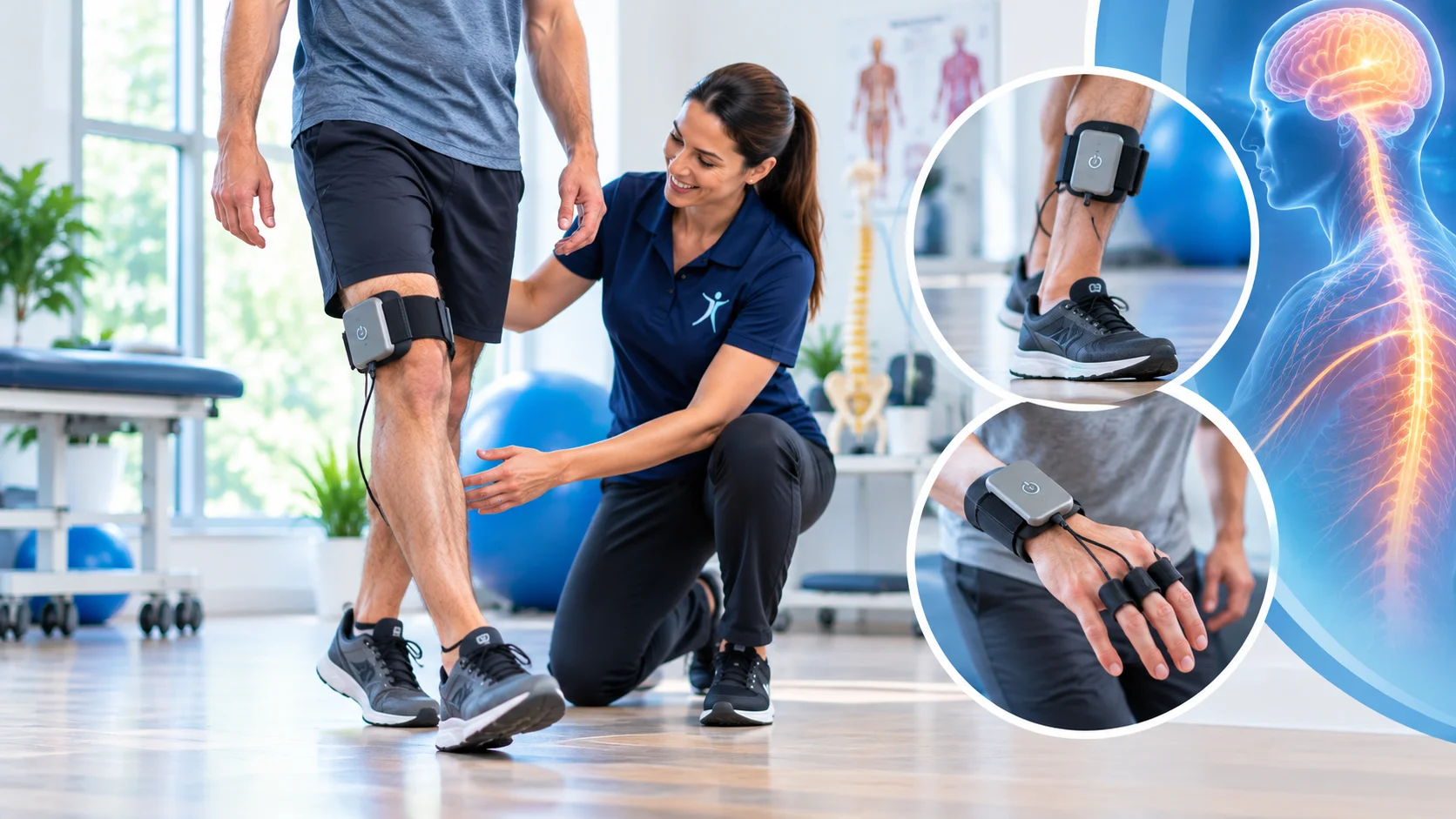
What Is Bioness Therapy?
Bioness therapy uses functional electrical stimulation, often called FES, to send low-level electrical signals to specific nerves and muscles. These signals help activate muscles that may not be responding properly because of stroke, traumatic brain injury, spinal cord injury, multiple sclerosis, cerebral palsy, radial nerve palsy, or other neurological conditions.
The goal is to support better movement patterns. For the leg and foot, this may mean helping lift the foot during walking. For the hand and forearm, this may mean helping with wrist position, finger movement, gripping, releasing, and everyday hand use.
Bioness care may be used alongside physiotherapy, gait training, hand rehabilitation, strengthening, balance work, functional tasks, and home practice.
How Does Bioness L300 Help With Foot Drop?
Foot drop happens when a person has trouble lifting the front part of the foot while walking. This can cause toe dragging, tripping, slower walking, reduced confidence, and a higher risk of falls.
The Bioness L300 Go Foot Drop System uses functional electrical stimulation to activate the nerves and muscles that help lift the foot during the swing phase of walking. This can support a smoother step and help the foot clear the ground more easily.
Foot Lifting Support
The device helps stimulate muscles that lift the foot during walking.
Improved Walking Pattern
Better foot clearance may support a more natural walking rhythm.
Reduced Tripping Risk
Helping the foot lift may reduce toe dragging and stumbling.
Gait Training Support
Bioness L300 may be used with walking practice, balance work, and mobility training.
Confidence With Movement
Improved foot control can help people feel more secure while walking.
What Features Make Bioness L300 Useful For Walking?
The Bioness L300 Go includes features designed to make foot drop therapy more adaptable during walking and daily activity.
3D Motion Detection
The system detects movement and helps time stimulation with walking patterns.
Multi-Channel Stimulation
Stimulation can be adjusted on either side of the foot to support better foot positioning during walking.
Home User App
The MyBioness app may help users set goals, track activity, and review progress outside therapy sessions.
Quick Set-Up
The system includes fewer parts, Quick Start Fitting Mode, and Bluetooth connectivity to simplify set-up.
Outcome Measures
Standardized evaluations can help record walking progress and track changes over time.
Who May Benefit From Bioness L300?
Bioness L300 may be considered for people dealing with foot drop or reduced walking control related to neurological conditions.
Stroke Survivors
Foot drop therapy may help support safer walking after stroke.
Multiple Sclerosis
People with MS may experience weakness, stiffness, or walking changes that affect foot clearance.
Traumatic Brain Injury
TBI can affect coordination, balance, and lower limb control.
Cerebral Palsy
Pediatric and adult users may need support with foot positioning, stability, and mobility.
Seniors With Mobility Concerns
Muscle weakness and balance issues may make walking less steady.
Knee or Thigh Weakness
Some Bioness options may support people dealing with foot drop along with knee instability or thigh weakness.
How Does Bioness H200 Help With Hand Rehabilitation?
The Bioness H200 is designed for people with hand weakness, reduced hand movement, or hand paralysis. It uses neuromuscular electrical stimulation to activate muscles in the hand and forearm.
This device helps position the wrist and hand while stimulating muscle activity. Over time, repeated practice may support strength, coordination, flexibility, and functional use of the hand.
Hand rehabilitation with Bioness H200 may support:
- Opening and closing the hand
- Wrist positioning
- Gripping and releasing objects
- Fine motor practice
- Daily activities such as eating, writing, holding items, or personal care
- Muscle re-education
- Improved coordination and hand awareness
This is where Bioness Therapy Calgary may be helpful for clients who need both education and guided rehabilitation planning.
How Does Bioness H200 Help With Hand Rehabilitation?
Bioness H200 may be considered for several conditions that affect hand and wrist movement.
Stroke – Stroke can cause stiffness, weakness, reduced range of motion, and difficulty with daily hand tasks.
Traumatic Brain Injury – TBI may affect brain-to-muscle communication and reduce hand coordination.
Spinal Cord Injury – Some spinal cord injuries may limit voluntary hand movement, grip, and dexterity.
Cerebral Palsy – Muscle stiffness, weakness, and changing levels of spasticity may affect hand control.
Multiple Sclerosis – MS can affect strength, coordination, fatigue levels, and hand mobility.
Radial Nerve Palsy – Nerve injury may cause wrist and finger weakness, making hand use more difficult.
What Happens During A Bioness Assessment?
A Bioness assessment looks at how the device may fit your movement goals. The process may include a review of your condition, daily challenges, strength, range of motion, walking pattern, hand function, balance, and personal goals.
For Bioness L300, assessment may include walking observation, foot clearance, balance, gait speed, and how the leg responds to stimulation.
For Bioness H200, assessment may include hand strength, wrist and finger movement, grip ability, functional tasks, range of motion, and comfort with the device.
Movement, strength, mobility, balance, and function are reviewed.
Goals may include safer walking, better hand use, improved independence, or daily task practice.
The therapist may help determine whether Bioness L300 or H200 fits your needs.
Clients learn how the device works and how it may support therapy goals.

Google Ratings
Based on 302 Reviews
How Are Bioness Devices Used With Physiotherapy?
Bioness devices are not meant to replace rehabilitation. They are used as part of a broader care plan that may include physiotherapy, strengthening, balance work, stretching, task practice, walking drills, and home activities.
For foot drop treatment, Bioness L300 may be used during gait training, stairs, balance activities, and walking practice. For hand rehabilitation, Bioness H200 may be used during reaching, grasping, releasing, wrist control, and daily task retraining.
Therapy may focus on helping the brain and body practice useful movement repeatedly. This repeated practice can support muscle re-education, coordination, confidence, and functional progress.
How Do Calgary Clients Access Bioness Equipment And Support?
For clients in Calgary, East Hills Physiotherapy can help you understand whether Bioness L300 or Bioness H200 may be suitable for your rehabilitation goals. If Bioness is being considered, the equipment and related service are provided through In Step Physical Therapy in Edmonton.
Because Bioness devices require proper fitting, stimulation settings, device education, and follow-up guidance, clients are directed to the appropriate service pathway through In Step Physical Therapy. This helps to ensure that the device is used safely and matched to your walking, hand function, mobility, and daily activity needs.
Book Bioness Therapy Support In Calgary
Foot drop, hand weakness, and neurological movement changes can affect walking, balance, confidence, daily tasks, and independence. Bioness L300 and Bioness H200 may support rehabilitation by using functional electrical stimulation to assist muscles during walking and hand movement.
If you are searching for Bioness therapy near me, East Hills Physiotherapy can help you explore your next step, while In Step Physical Therapy in Edmonton provides the equipment and service. For Bioness Therapy Calgary, contact East Hills Physiotherapy today to ask about referral guidance and rehabilitation support.
Bioness Equipment And Service Provider
Giri Srinivasan, Registered Physiotherapist: Owner & CEO Of In Step Physical Therapy, Edmonton
Giri Srinivasan is a Registered Physiotherapist and the Owner and CEO of In Step Physical Therapy in Edmonton. He has over 25 years of experience in orthopedic, sports, and neurological rehabilitation and is certified as a Bioness H200 and L300 Clinician.
His background includes neurological rehabilitation, developmental therapy for people with cerebral palsy and other neurological disabilities, vestibular rehabilitation, spinal manipulation, acupuncture, IMS, Functional Movement Screen, Selective Functional Movement Assessment, LSVT BIG, WalkAide, PONS training, concussion rehabilitation, Functional Capacity Evaluation, and chronic pain care.
For Bioness-related services, Giri’s experience with neurological rehabilitation and Bioness H200 and L300 systems supports clients who need help with foot drop, walking control, hand weakness, stroke rehabilitation, traumatic brain injury recovery, spinal cord injury concerns, multiple sclerosis-related movement challenges, cerebral palsy-related mobility concerns, and hand function therapy.

Frequently Asked Questions
General Questions About Bioness Therapy
Bioness Therapy in Calgary uses functional electrical stimulation (FES) to activate weakened muscles in the hand or leg. The therapy helps improve movement patterns, supports rehabilitation, and complements physiotherapy for neurological conditions.
Bioness therapy may benefit people recovering from stroke, multiple sclerosis, spinal cord injuries, TBI (traumatic brain injuries), or other neurological conditions that affect walking or hand function.
Unlike traditional therapy alone, Bioness combines functional electrical stimulation with therapeutic exercises and movement training to encourage more natural muscle activation during everyday activities.
Yes. At East Hills Physiotherapy, Bioness is typically integrated into a personalized physiotherapy program that may also include strengthening exercises, balance training, and functional rehabilitation.
Your physiotherapist will evaluate your mobility, muscle strength, neurological condition, and treatment goals to determine whether the Bioness system is appropriate for your rehabilitation plan.
Treatment frequency depends on the condition and the recovery goals. Your physiotherapist will recommend schedule based on your assessment and monitor your progress throughout your rehabilitation.
Bioness H200 and Hand Rehabilitation
The Bioness H200 in Calgary is an FES device designed to improve hand rehabilitation by stimulating muscles involved in grasping, releasing, and functional hand movements.
It is commonly used for hand weakness following stroke and other neurological conditions that affect upper limb function.
It may help improve hand activation, grip function, and coordination when combined with a structured stroke hand therapy program.
Most patients describe the stimulation as a mild tingling sensation. Your physiotherapist adjusts the settings to maintain comfort throughout treatment.
Bioness provides active muscle stimulation during functional tasks, helping reinforce movement patterns while working alongside conventional rehabilitation exercises.
Yes. Therapy focuses on improving tasks such as holding objects, writing, eating, dressing, and other daily activities.
No. It may also be used for other neurological conditions affecting hand function when clinically appropriate.
Yes. Consistent therapy aims to improve coordination, dexterity, strength, and functional hand use over time.
Gait Training and Mobility
Gait training focuses on improving walking mechanics, balance, coordination, and overall mobility through structured therapeutic exercises.
Gait training helps patients develop safer, more efficient walking patterns while maximizing the benefits of the Bioness L300.
Many patients experience improvements in walking stability, mobility, and confidence as part of their rehabilitation program.
Yes. Therapy includes balance and mobility exercises that prepare patients for navigating different environments safely.
Improved muscle activation and walking mechanics may contribute to increased walking efficiency and speed over time.
The primary goals are to improve safety, independence, endurance, balance, and overall walking function.
Bioness L300 and Foot Drop Treatment
The Bioness L300 in Calgary is an advanced FES system designed to assist individuals with foot drop treatment by stimulating the muscles responsible for lifting the foot during walking.
The device delivers gentle electrical stimulation at the right time during each step, helping improve foot clearance, walking efficiency, and overall gait mechanics.
People experiencing foot drop due to stroke, multiple sclerosis, spinal cord injury, or certain neurological disorders may be suitable candidates following a clinical assessment.
Yes. Many patients experience improved walking stability, greater confidence, and better mobility as part of a comprehensive foot drop therapy program.
For many individuals, consistent therapy combined with exercise and gait training can improve functional mobility and support long-term rehabilitation goals.
Depending on the type and severity of the nerve injury, your physiotherapist can determine whether the Bioness L300 is an appropriate treatment option.
Improving foot clearance and walking mechanics may help reduce tripping hazards and improve balance, which can lower the risk of falls.
Recovery varies from person to person. Some individuals notice improvements within the few sessions, while others require ongoing therapy to achieve their goals.
Functional Electrical Stimulation (FES)
Functional electrical stimulation (FES) uses controlled electrical impulses to activate weakened muscles and promote functional movement during rehabilitation.
Yes. FES is widely used in neurological rehabilitation and is administered by trained healthcare professionals after determining patient suitability.
Electrical stimulation helps muscles contract during specific activities, encouraging more natural movement patterns and improving functional performance.
While FES does not repair damaged nerves, it helps stimulate muscles, improve movement quality, and support overall rehabilitation.
With consistent treatment and exercise, many patients experience improved muscle recruitment and functional movement.
Bioness therapy supports muscle activation and movement retraining, helping improve function alongside strengthening exercises.
Conditions Treated
Yes. Stroke rehabilitation is one of the most common uses for both the Bioness L300 and Bioness H200 systems.
Depending on your symptoms, Bioness may help improve walking or hand function as part of a personalized rehabilitation program.
Some individuals with an incomplete spinal cord injuries may benefit. A physiotherapist will determine if the therapy is appropriate.
Eligibility depends on the child's condition and clinical assessment. Your physiotherapist can discuss suitable treatment options.
If neurological symptoms are affecting your walking or hand function, an assessment can determine whether Bioness therapy may be beneficial.
No. Bioness is most effective when combined with a comprehensive physiotherapy program.
Appointments, Insurance & East Hills Physiotherapy
Wear comfortable cloth that will allow easy access to your legs or arms, depending on your treatment.
Appointment times vary, but sessions generally include device application, therapeutic exercises, and progress monitoring.
Yes. Home exercises often complement your clinic sessions and support ongoing progress.
Progress is measured through changes in mobility, strength, walking ability, hand function, and achievement of your rehabilitation goals.
Coverage varies by insurance provider. Our team can help you review your available physiotherapy benefits.
East Hills Physiotherapy provides personalized rehabilitation programs that combine Bioness technology with evidence-based physiotherapy to help patients improve mobility and independence.
Many patients experience improvements in everyday tasks such as dressing, eating, and personal care through structured hand rehabilitation.
Every treatment plan is tailored to your condition, mobility level, functional goals, and progress throughout rehabilitation.
If you're searching for Bioness therapy near me, East Hills Physiotherapy offers comprehensive assessments and personalized treatment programs for foot drop and hand rehabilitation in Calgary.
You can contact East Hills Physiotherapy to schedule an assessment. Our team will evaluate your condition and then determine whether Bioness Therapy in Calgary is the right treatment option for your recovery.