

- Home
- Postural dysfunction treatment calgary
Postural Dysfunction Treatment Calgary
Correcting Posture for Lasting Comfort
Book Your Appointment
Physiotherapy for Better Alignment and Movement
Postural dysfunction treatment Calgary at East Hills Physiotherapy helps you understand what’s happening in your body and build habits that support more comfortable movement. Postural education is one of the services we offer as part of a broader physiotherapy plan, helping reduce strain, ease discomfort, and support better alignment across Southeast and Northeast Calgary.
- Do you notice yourself slouching at your desk, only to sit up straight for a few minutes before slipping back into old habits?
- Does your neck, upper back, or shoulders ache by the end of a workday?
- Have you noticed your posture changing over time, without a clear injury to explain it?
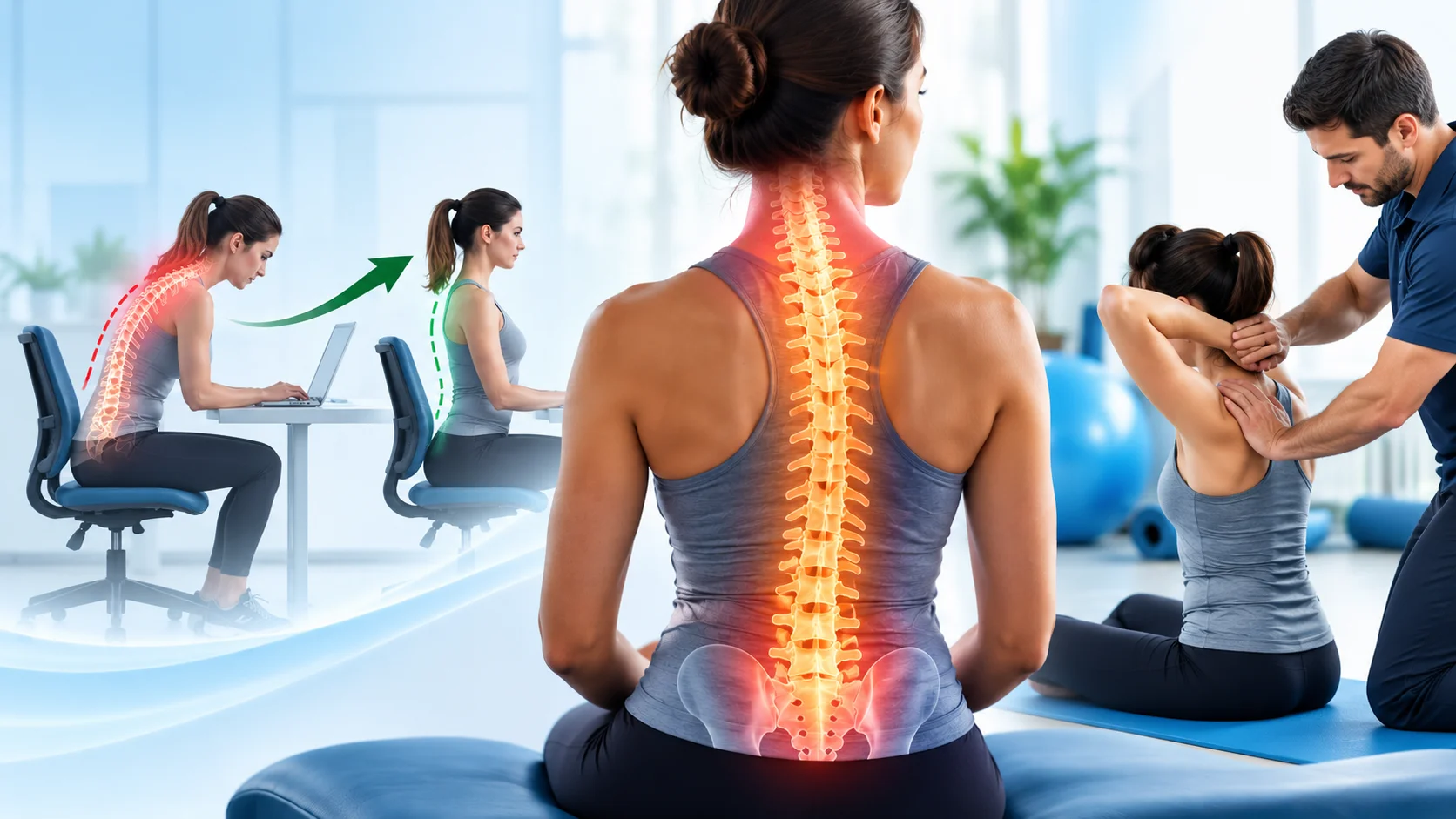
What Is Postural Dysfunction?
Postural dysfunction refers to patterns of standing, sitting, or moving that place uneven strain on the body’s muscles, joints, and connective tissues.
- Often develops gradually from repeated habits, such as long hours at a desk, driving, or looking down at a phone.
- May involve rounded shoulders, a forward head position, an excessive curve in the lower back, or uneven weight distribution
- Can affect the neck, shoulders, upper back, lower back, hips, and even the way you breathe
- Is rarely caused by a single event, but rather builds up over months or years of repeated positioning
What Can Contribute to Postural Dysfunction?
Prolonged Desk and Computer Work
Long periods of sitting may contribute to neck, shoulder, upper-back, hip, or lower-back discomfort. A low monitor, unsupported chair, distant keyboard, or frequently used mouse can increase physical effort.
Phone and Tablet Use
Looking downward at a phone or tablet for long periods may increase strain through the neck, shoulders, arms, and upper back.
Driving and Vehicle-Based Work
Driving involves prolonged sitting, repeated head turning, vibration, and limited movement.
Repetitive Lifting and Reaching
Lifting, stocking, carrying, pushing, pulling, or reaching overhead may create strain when the same movement is repeated throughout the day.
Prolonged Standing
Standing for long periods contributes to foot fatigue, hip tension, knee discomfort, or lower-back strain.
Muscle Weakness and Reduced Endurance
Weakness through the upper back, shoulders, hips, legs, or trunk may make it harder to maintain comfortable positions during work and daily activity.
Joint Stiffness and Limited Mobility
Restricted movement through the neck, upper back, shoulders, hips, or ankles may cause other areas to compensate.
Previous Injury or Surgery
Pain after an injury, fracture, surgery, or motor vehicle accident may change how you sit, stand, walk, or use one side of the body.
Stress and Muscle Guarding
Stress can contribute to raised shoulders, jaw tension, shallow breathing, and persistent muscle guarding.
Areas Commonly Affected by Postural Strain
Neck and Upper-Back Tension
Prolonged screen use, driving, or repeated downward looking may contribute to neck stiffness and upper-back fatigue.
Rounded Shoulders and Chest Tightness
Rounded shoulders may become more noticeable during prolonged sitting or repeated reaching.
Lower-Back Discomfort
Lower-back symptoms may be influenced by prolonged sitting, standing, lifting, hip stiffness, or reduced trunk endurance.
Headache-Related Muscle Tension
Some headaches may be associated with neck, shoulder, jaw, or upper-back tension.
Hip and Pelvic Imbalance
Repeatedly standing on one leg, crossing the legs, carrying items on one side, or sitting unevenly may contribute to hip or pelvic discomfort.
Wrist and Forearm Strain
Keyboard use, gripping, tool work, and unsupported wrists may contribute to forearm fatigue or discomfort.
How Postural Dysfunction Affects Your Body
Poor posture doesn’t just affect how you look standing or sitting. It changes how force moves through your body during everyday movement.
- Increased strain on the neck region and shoulder muscles as they work to support a forward head position
- Reduced efficiency in breathing mechanics when the chest and rib cage are compressed
- Greater load on the lower back when the pelvis and spine are not well aligned
- Compensations in the hips, knees, or ankles as the body adjusts to imbalances higher up
- Reduced range of motion over time as certain muscles become tight while others weaken
- Increased fatigue during daily activities, since poor alignment often requires more muscular effort to maintain
Over time, these compensations can create a cycle that’s difficult to break without guided support. A tight muscle in one area often leads to weakness in another, and the body finds new ways to compensate that may feel comfortable in the short term but add further strain in the long run.
What Happens During Your Postural Assessment
Initial Assessment
Your physiotherapist reviews your symptoms, daily habits, work setup, and activity level, then observes your posture during standing, sitting, and movement to identify patterns contributing to your discomfort.
Movement and Strength Testing
Your physiotherapist assesses flexibility, strength, and movement quality in the neck, shoulders, spine, hips, and core to understand which areas may be tight, weak, or restricted.
Postural Analysis
Specific attention is given to head position, shoulder alignment, spinal curves, and weight distribution, both at rest and during common daily movements.
Identifying Contributing Habits
Your physiotherapist discusses your daily routine, including work setup, screen use, and physical activity, to identify habits that may be reinforcing your current posture.
Treatment Approaches for Postural Dysfunction
Manual Therapy
Hands-on techniques help release tight muscles and improve mobility in restricted joints, making it easier for your body to move into and maintain better alignment.
Therapeutic Exercise
A combination of stretching and strengthening exercises addresses the specific muscle imbalances contributing to your posture, targeting both the tight muscles that need to lengthen and the weak muscles that need to strengthen.
Postural Education
You’ll receive practical guidance on sitting, standing, and moving in ways that reduce strain, along with strategies for building better habits into your daily routine.
Ergonomic Guidance
Your physiotherapist may provide recommendations for your workstation setup, including chair height, monitor position, and keyboard placement, to support better posture throughout the day.
Spinal Manipulation and Mobilization
When joint stiffness is contributing to postural compensations, spinal manipulation or mobilization may help restore movement and support a more balanced position.
Dry Needling and Acupuncture
Dry needling may be considered when trigger points or muscle tension contribute to discomfort or restricted movement.
Acupuncture may be included for selected painful conditions or muscle-tension concerns. Both are used within a wider plan that includes movement and exercise.
Building Better Habits Between Visits
Postural change takes consistency, and small daily adjustments often matter more than occasional effort.
- Setting reminders to check in on your posture throughout the day, especially during long hours of sitting
- Taking regular movement breaks to counteract the effects of prolonged static positions
- Practicing your prescribed exercises consistently, since strength and flexibility changes take time to develop
- Adjusting your workstation, vehicle seat, or other frequently used spaces to better support your body
- Paying attention to how you carry bags, hold your phone, or position yourself during daily tasks
- Building movement variety into your day, rather than staying in one position for hours at a time
Is Postural Dysfunction Treatment Covered by Insurance?
Postural dysfunction treatment is provided as part of physiotherapy care at East Hills Physiotherapy and may be covered through:
- Extended health benefits, subject to your annual maximum and per-visit allowance
- Approved Workers’ Compensation Board (WCB) Alberta claims, when postural strain relates to a workplace injury
- Direct billing with participating insurance providers, reducing the need to submit receipts yourself
- A physician’s referral is usually not required to book physiotherapy, though some insurers may request one for reimbursement
Why Choose East Hills Physiotherapy
Personalized Care
Your postural treatment plan is built around your specific posture, daily habits, and symptoms rather than a generic checklist.
Hands-On and Exercise-Based Treatment
Our postural dysfunction treatment Calgary combines manual therapy, dry needling, therapeutic exercise, and spinal manipulation depending on your needs.
Practical, Everyday Guidance
We focus on strategies you can realistically apply to your workstation, daily habits, and routine, not just exercises confined to the clinic.
Clear Communication
We explain what’s contributing to your posture and walk you through each stage of your treatment plan.
Direct Insurance Support
Direct billing may be available for eligible extended health and WCB Alberta claims.
Stand Taller, Move Easier
Postural dysfunction develops gradually, and improving it takes the same steady, consistent approach. At East Hills Physiotherapy, our postural dysfunction treatment Calgary combines hands-on therapy, targeted exercise, and practical education so your care is built around your body and your daily life.
Whether your posture has been shaped by years at a desk, an old injury, or habits you’ve never quite been able to shake, we’re here to help you move with more comfort and confidence.
Book your postural dysfunction treatment appointment in Calgary with East Hills Physiotherapy today.
Meet Our Postural Dysfunction Physiotherapy Team

Ramesh Bimagani
PT and Clinic Director
Ramesh has practised physiotherapy since 2000 and supports people with spinal, shoulder, neurological, sports, and workplace concerns. His care may include manual therapy, spinal manipulation, acupuncture, dry needling, myofascial release, postural education, and exercise planning.

Harmandeep Singh
Physiotherapist
Harmandeep supports spine, hip, knee, shoulder, orthopedic, and workplace concerns through functional assessment, exercise prescriptions, manual therapy, taping, myofascial release, and practical education shaped around daily movement and work demands.

Suchi Gidwani
Physiotherapist
Suchi brings more than 13 years of physiotherapy experience and supports people with musculoskeletal discomfort, stiffness, repetitive strain, and reduced mobility. Her care may include manual therapy, dry needling, strengthening, and functional rehabilitation.

Aanchal Badhwar
Physiotherapist
Aanchal supports muscle tension, core weakness, jaw concerns, pelvic health needs, and movement limitations through mobility work, manual therapy, breathing, strengthening, and practical exercise guidance shaped around daily activity.
Frequently Asked Questions
Understanding Postural Dysfunction
Postural dysfunction describes movement or positioning habits that repeatedly place extra demand on muscles, joints, or soft tissues. It may contribute to discomfort, stiffness, fatigue, or reduced tolerance for sitting, standing, work, or exercise.
No. There is no single posture that suits every body or activity. Comfortable movement usually depends on position variety, strength, mobility, breathing, task demands, and how long one position is maintained.
Common signs may include neck tension, rounded shoulders, upper- or lower-back discomfort, headaches, stiffness after sitting, standing fatigue, reduced movement, and symptoms that improve after changing position or taking a break.
Posture may contribute to neck or back discomfort when one position is held too long or physical capacity is limited. Strength, mobility, stress, sleep, previous injuries, and daily demands may also influence symptoms.
Postural habits may influence balance when weight is consistently shifted, lower-body strength is reduced, or joint mobility is limited. Physiotherapy may review standing control, walking, balance reactions, and movement confidence during everyday tasks.
Consider physiotherapy when stiffness, pain, fatigue, headaches, or reduced movement interfere with work, driving, sleep, exercise, or daily activity. An assessment can identify relevant movement, strength, mobility, and workstation factors.
Symptoms and Areas Commonly Affected
Some headaches may be associated with neck, shoulder, jaw, or upper-back tension. Physiotherapy may support mobility, muscle comfort, breathing, and movement breaks, while sudden or severe headaches require medical attention.
Posture physiotherapy helps improve shoulder mobility, upper-back movement, rotator cuff strength, and shoulder-blade control. The goal is not rigid posture correction, but stronger, more comfortable movement across daily positions and tasks.
Posture may influence shoulder loading during reaching, typing, lifting, or overhead activity. Shoulder mobility, shoulder-blade control, upper-back movement, strength, and task setup may all need review during assessment.
Lower-back discomfort may be influenced by prolonged sitting, standing, lifting, hip stiffness, or reduced trunk endurance. Physiotherapy may include mobility, core control, hip strengthening, walking, and practical position changes.
Repeatedly standing on one leg, crossing the legs, carrying loads on one side, or sitting unevenly may contribute to hip or pelvic tension. Strength, mobility, balance, and movement variety may help.
Keyboard use, gripping, tool work, and unsupported wrists may contribute to forearm fatigue or discomfort. Ergonomic guidance, mobility work, grip exercises, and task changes may reduce repeated physical strain over time.
Exercises and Movement Strategies
Exercises may include chin nods, wall slides, band rows, thoracic rotation, bridges, clamshells, sit-to-stand practice, chest mobility, hip strengthening, breathing exercises, and walking breaks matched to your needs.
Exercise frequency depends on your program, symptoms, recovery, and activity level. Short mobility or movement breaks may be frequent, while strengthening sessions usually need appropriate recovery between workouts for comfort.
Strengthening may help muscles tolerate sitting, standing, lifting, carrying, and reaching. Upper-back, shoulder, hip, trunk, and leg exercises are often more useful than repeatedly forcing yourself into one rigid posture
Breathing exercises may reduce muscle guarding and improve coordination between the diaphragm, trunk, ribs, and pelvic floor. They may be useful when stress, shallow breathing, or bracing contributes to discomfort.
Changing position every 30 to 60 minutes may help reduce stiffness and fatigue. Brief walking, standing, stretching, or task changes can provide useful movement variety without requiring long exercise breaks.
Walking may support spinal movement, hip mobility, circulation, endurance, and position variety. Start with a manageable duration and increase gradually according to comfort, symptoms, balance, and your overall activity level.
Yes. Your home program may include mobility, strengthening, breathing, balance, or postural endurance exercises. We explain frequency, technique, progression, and which symptoms should lead you to modify or pause an exercise.
Recovery, Safety, and Long-Term Management
Recovery time depends on symptom duration, strength, mobility, work demands, previous injuries, exercise consistency, and daily habits. Some people notice changes within weeks, while others need a longer rehabilitation period.
Yes. Symptoms may return when workload, sitting time, stress, lifting demands, or activity levels change. Continuing strength, mobility, movement breaks, and ergonomic habits may help reduce repeated flare-ups.
No. Holding one rigid posture all day may create fatigue and tension. A more practical goal is comfortable alignment, regular position changes, movement variety, and enough strength to tolerate daily tasks.
Mild muscle effort or temporary soreness may occur after unfamiliar exercises. Sharp, severe, spreading, or steadily worsening symptoms should be reported so your physiotherapist can adjust the program appropriately.
Seek prompt medical care for new weakness, persistent numbness, loss of hand control, changes in walking, chest discomfort, breathing difficulty, fever, severe dizziness, or new bladder or bowel changes.
Long-term management may include regular strengthening, mobility, walking, ergonomic changes, movement breaks, sleep-position adjustments, and updated exercises when work, health, symptoms, or activity demands change over time.
Causes and Everyday Contributors
Prolonged sitting may contribute to neck, shoulder, back, and hip discomfort, especially when movement breaks are limited. Chair support, screen position, strength, mobility, and total sitting time may all affect comfort.
Looking downward at a phone or tablet for long periods may increase neck, shoulder, arm, and upper-back strain. Raising the screen, supporting the arms, and changing position regularly may reduce physical demand.
Driving involves prolonged sitting, vibration, repeated head turning, and limited movement. Seat position, steering reach, back support, hip mobility, neck movement, and movement breaks may influence comfort during longer trips.
Standing for long periods may contribute to foot fatigue, hip tension, knee discomfort, or lower-back strain. Footwear, standing surfaces, weight shifting, strength, and regular position changes may help support comfort.
Stress may contribute to raised shoulders, jaw tension, shallow breathing, and persistent muscle guarding. Breathing exercises, movement, massage therapy, relaxation strategies, and suitable medical or mental health support may help.
Pain after an injury, fracture, surgery, or collision may change how you sit, stand, walk, or use one side. Physiotherapy may help restore movement, rebuild strength, and reduce protective movement habits gradually.
Postural Assessment and Treatment
Your physiotherapist may review sitting, standing, walking, lifting, reaching, spinal mobility, shoulder movement, hip mobility, strength, balance, breathing, workstation habits, and the activities that increase or reduce your symptoms.
Yes. Posture is more useful when reviewed during real tasks such as sitting, standing, walking, lifting, reaching, or working. This helps identify movement demands rather than judging one still position.
Manual therapy may support joint mobility, reduce muscle guarding, and improve soft-tissue movement through the neck, back, shoulders, or hips. It is usually combined with exercise and practical movement guidance.
Dry needling may be considered when trigger points or muscle tension contribute to discomfort or restricted movement. It may support temporary relief while exercise, mobility work, and posture changes address broader factors.
Acupuncture may be included for selected painful conditions or muscle-tension concerns. It is generally used within a wider plan that also includes movement, exercise, education, and changes to daily activity.
Massage therapy may support relaxation and soft-tissue comfort through the neck, shoulders, back, hips, or forearms. It works alongside strengthening, mobility, ergonomic changes, and movement variety rather than replacing them.
Care may include therapeutic exercise, manual therapy, work ergonomics, mobility training, dry needling, acupuncture, massage therapy, breathing strategies, strengthening, and a personalized home program based on assessment findings.
Work, Home Office, and Daily Activities
Physiotherapy may review chair support, monitor height, keyboard and mouse placement, arm position, movement breaks, neck mobility, upper-back strength, and work tolerance to reduce repeated strain during desk-based tasks.
Your monitor should generally sit directly in front of you, with the upper screen near eye level. This may reduce repeated neck bending and forward reaching during longer periods of computer work.
A standing desk may support position changes when used appropriately. The benefit comes from alternating between sitting and standing, not remaining in one static standing position throughout the entire workday.
Physiotherapy may review seat position, steering reach, back support, neck mobility, hip comfort, and movement breaks. Recommendations are shaped around your vehicle, driving duration, symptoms, and daily travel demands.
Lifting technique may influence neck, shoulder, back, hip, and knee loading. Physiotherapy may review foot position, load placement, breathing, trunk control, carrying distance, and repeated lifting demands during work or home tasks.
Yes. Care may address footwear, standing surfaces, weight shifting, hip and leg strength, movement breaks, lifting habits, and work tolerance for healthcare, retail, trades, warehouse, and service roles.
Insurance, Booking, and East Hills Physiotherapy
Many extended health plans may cover physiotherapy for postural discomfort, neck tension, back pain, or workplace strain. Coverage limits, referral requirements, and reimbursement amounts vary, so confirm your individual benefits.
A physician’s referral is generally not required to book physiotherapy, although some insurers request one for reimbursement. Workplace injuries and motor vehicle claims may follow separate authorization and reporting requirements.
Bring insurance details, medical notes, information about previous injuries, and photos of your workstation when relevant. Wear comfortable clothing that allows us to assess movement, strength, posture, lifting, or reaching.
East Hills Physiotherapy provides assessment-led care shaped around your movement, strength, mobility, work setup, daily habits, and goals. Plans may include exercise, hands-on care, ergonomics, and home guidance when appropriate.
Lifting technique may influence neck, shoulder, back, hip, and knee loading. Physiotherapy may review foot position, load placement, breathing, trunk control, carrying distance, and repeated lifting demands during work or home tasks.
Contact East Hills Physiotherapy and share your symptoms, work demands, preferred Calgary location, schedule, and insurance information. Your first appointment can then review posture, movement, strength, mobility, and daily activities.
Reviews
When I first walked in my pain level was at a 9. A few weeks before I was walking with a walking stick as I couldn’t put any weight on my leg knee. After 2 months I am now at a level 3 and rode a bike today. Thank you so much thank you 🙏 for all you have done great technique and hands on knowledge of what muscle was injured.
Ramesh is great. He makes sure that you feel well before leaving the clinic. He does everything and its great!
Aanchal my physiotherapist is just amazing. Her hands are magic and her approach is so gentle. She educates every concern and this just increases my confidence in her care. Highly recommend her!
Thanks to Aanchal I can now go for long walks with my dog! I started my sessions for shoulder concerns but she works with the body as a whole and this just really improved my quality of life. Thanks to Simran and niba too!
An amazing experience the whole way through. It feels like a welcoming environment and I always leave feeling better than when I came in. I always trust coming to physio, as its the reason I'm walking today.