

At East Hills Physiotherapy, our Functional Capacity Evaluation Calgary reviews physical ability through structured, practical tasks. An FCE may be requested when an injury, surgery, motor vehicle accident, workplace concern, disability claim, or long recovery period creates uncertainty about activity tolerance. We consider your health history, symptoms, current restrictions, work demands, and the evaluation purpose before testing begins. The findings support conversations about rehabilitation, modified duties, return-to-work planning, and other functional next steps.
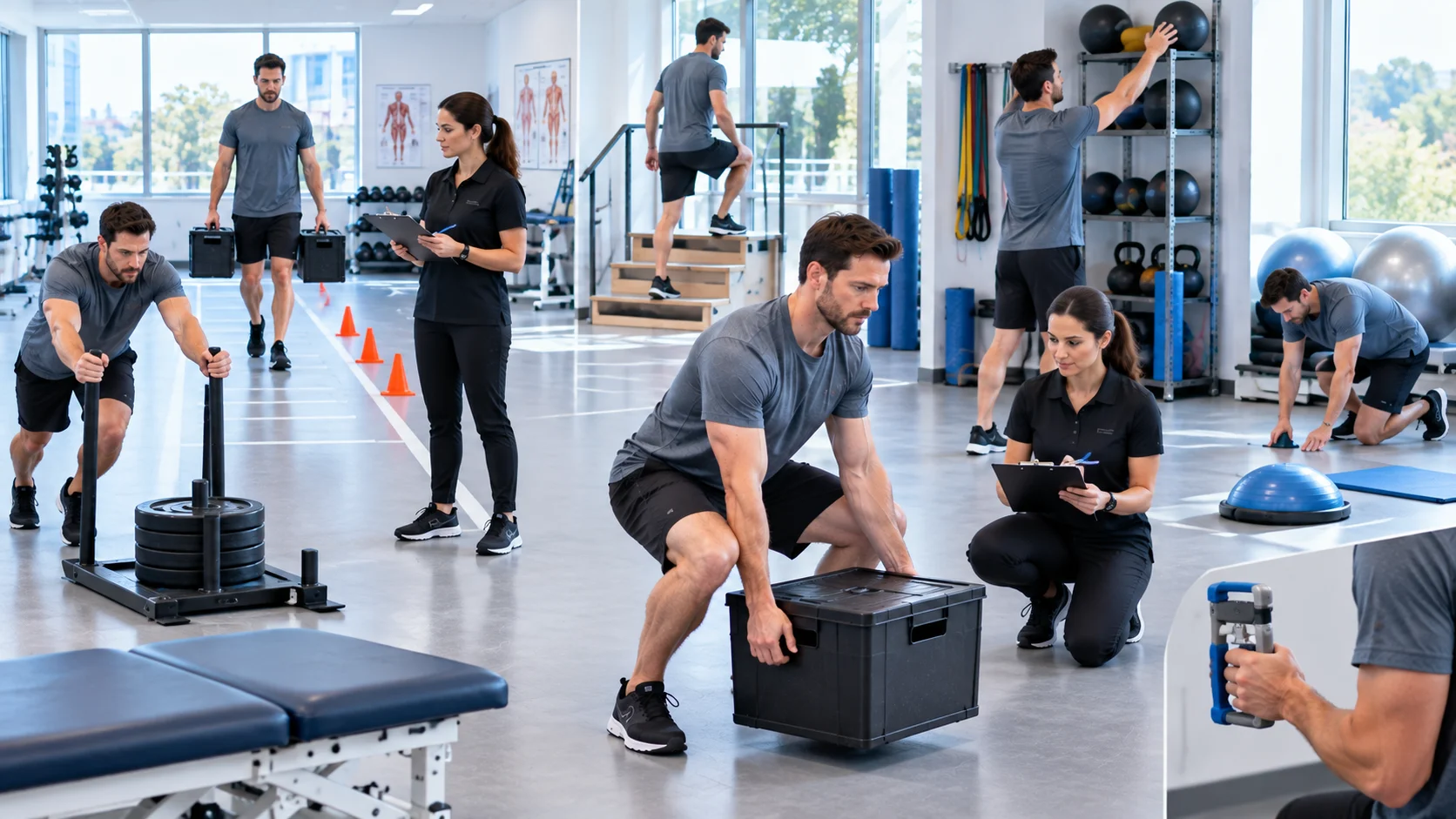
A Functional Capacity Evaluation is a structured physical testing process that reviews how a person performs specific activities, often reflecting work-related and daily movement demands.
An FCE looks at areas such as:
Your comfort, health history, current symptoms, job duties, and activity limits are reviewed before testing begins. A Functional Capacity Evaluation doesn’t replace legal, medical, or employment advice. It provides objective physical information that supports decision-making for work, activity, rehabilitation, and claim-related planning.
An FCE provides structured information about your current physical abilities and activity response.
It may help clarify:
An FCE does not replace legal, employment, or medical decision-making. Instead, it provides functional findings that authorized parties may use alongside other relevant information.
Our Functional Capacity Evaluation Calgary is appropriate when physical ability needs to be documented clearly.
An FCE may be requested after a workplace injury when pain, weakness, stiffness, or reduced endurance affects job duties. Testing can compare current abilities with tasks such as lifting, carrying, walking, standing, reaching, or repeated movement.
Some people feel ready to return but remain uncertain about strength, endurance, or task tolerance. An FCE can provide information that supports planning for regular duties, modified duties, reduced hours, or gradual increases in physical demands.
A collision may affect lifting, sitting, driving, walking, balance, neck movement, or overall endurance. Functional testing may help show how accident-related symptoms affect work and daily activity.
After surgery, an FCE may be considered when physical abilities need to be reviewed before returning to work or demanding activities. Testing follows current medical restrictions and the purpose of the referral.
Insurers or case managers may request an FCE when they need structured information about physical function, work tolerance, activity limits, or rehabilitation needs. Authorization and report requirements should be confirmed before booking.
An FCE may compare physical test findings with the demands listed in a job description or physical demands analysis. This can help clarify whether current abilities align with regular duties or whether temporary changes may be needed.
People experiencing persistent pain, fatigue, weakness, or restricted movement may need a clearer understanding of how these concerns affect practical activity. An FCE reviews the current function rather than relying only on the age of the injury.
We begin by discussing your injury history, current symptoms, work role, activity limits, recovery stage, and reason for the evaluation.
Your physiotherapist reviews the physical demands of your work or daily tasks, including lifting, carrying, standing, walking, sitting, reaching, bending, climbing stairs, or repetitive duties.
Your mobility, strength, posture, balance, flexibility, grip strength, and movement quality are reviewed through structured testing.
Testing includes practical tasks that match real work or daily activity demands, adjusted based on your role, safety, and the purpose of the evaluation.
Your response to the activity is monitored throughout the session, including pain reports, fatigue, movement changes, effort, breaks, and task tolerance.
A written report is prepared with findings related to physical abilities, tolerated activities, limitations, and functional recommendations when appropriate.
A Functional Capacity Evaluation Calgary is more detailed than a regular physiotherapy visit because it focuses on measurable physical ability and functional performance.
Reviews how the body handles weight during different positions, including floor-to-waist, waist-to-shoulder, carrying distance, and repeated lifting tasks.
Helps review strength, posture, control, and tolerance during tasks often used in healthcare, warehouse work, trades, retail, and industrial settings.
These tasks help measure endurance and comfort during common work and daily activities.
Important for jobs involving shelves, tools, caregiving, cleaning, repairs, childcare, or physical labour.
Reviewed when work involves tools, typing, carrying, handling objects, or repetitive hand use.
Reviewed when work involves stairs, uneven surfaces, ladders, walking, turning, or physical transitions.
Repeated movement testing helps show how the body responds over time, especially when fatigue, discomfort, or reduced endurance affects performance.
Preparing well helps the session run smoothly and keeps the results useful. Before your appointment:
During the evaluation, communicate clearly about symptoms, fatigue, dizziness, discomfort, or changes in movement. Honest effort and honest reporting both matter during FCE testing.
A regular physiotherapy visit focuses on treatment, recovery, pain reduction, mobility, strength, and rehabilitation planning. A Functional Capacity Evaluation focuses on testing and documenting functional ability.
Both services support recovery, but they serve different purposes. Some patients attend physiotherapy before or after an FCE, depending on their needs and goals.
Coverage depends on the reason for the evaluation and the insurance or claim pathway involved.
Some plans cover physiotherapy-related services, while others require approval before an FCE. When an FCE evaluation is requested by an insurer, employer, lawyer, or case manager, payment instructions are often arranged before the appointment. Our team provides receipts and clinic information needed for claim submission when applicable.
Our FCE process reviews strength, mobility, tolerance, work-related movement, and daily function in a clear, step-by-step format.
Testing is connected to real physical demands such as lifting, walking, carrying, standing, bending, reaching, and task endurance.
The written report summarizes functional findings in a practical way for patients, healthcare providers, insurers, employers, or case managers when authorized.
We explain the process, monitor your response, and keep testing focused on safety and function throughout.
As a physiotherapy clinic, East Hills Physiotherapy also supports recovery through treatment, exercise programs, movement education, and return-to-activity planning when needed.
When work ability or activity tolerance is uncertain, a Functional Capacity Evaluation can provide structured information about lifting, carrying, sitting, standing, walking, reaching, bending, balance, and repeated-task endurance.
Our Functional Capacity Evaluation Calgary is shaped around the referral purpose, physical demands, safety considerations, and your current abilities. The findings may support return-to-work planning, modified duties, rehabilitation decisions, disability review, or activity guidance.
Contact our East Hills Physiotherapy clinic to discuss booking requirements, referral documents, payment arrangements, and the information needed before your evaluation.

Ramesh has practised physiotherapy since 2000 and supports people with musculoskeletal injuries, neurological conditions, sports injuries, vestibular concerns, and movement restrictions. His background includes functional assessment, manual therapy, exercise planning, gait support, and activity-based rehabilitation.

Harmandeep works with spine, hip, knee, shoulder, orthopedic, sports-related, and workplace movement concerns. His approach may include functional assessment, exercise planning, manual therapy, strengthening, taping, and patient education.

Suchi brings more than 13 years of physiotherapy experience and supports people with musculoskeletal concerns, mobility limitations, and reduced physical function. Her care may include movement assessment, therapeutic exercise, mobility work, and functional rehabilitation.
A Functional Capacity Evaluation is structured physical testing that reviews lifting, carrying, walking, standing, sitting, reaching, balance, grip, and endurance. It provides practical information about current abilities, activity limits, and work-related tolerance.
FCE stands for Functional Capacity Evaluation. It is a structured assessment used to review physical performance during work-related and everyday tasks, including strength, mobility, endurance, movement control, and repeated activity tolerance.
A Functional Capacity Evaluation may be requested after a workplace injury, surgery, motor vehicle accident, disability claim, or long recovery period when physical abilities, activity tolerance, or return-to-work readiness need clearer documentation.
No. Physiotherapy focuses on treatment, movement, strength, and recovery, while an FCE focuses on structured testing and documentation. Some people receive physiotherapy before or after an evaluation, depending on their needs.
A functional abilities evaluation reviews how you perform physical tasks related to work and daily life. It may assess strength, mobility, lifting, carrying, walking, posture, balance, and endurance during repeated activities.
An employer may request an FCE to better understand whether current abilities match regular job duties. Findings may support modified duties, gradual return-to-work planning, task changes, or further rehabilitation discussions.
An FCE may test lifting, carrying, pushing, pulling, walking, standing, sitting, reaching, bending, squatting, kneeling, stairs, grip strength, balance, posture, and tolerance during repeated activity over a structured period of time.
Yes. FCE testing often includes lifting from different heights, such as floor to waist or waist to shoulder. The evaluator reviews load tolerance, movement control, posture, repetition, and symptom response.
Yes. Sitting tolerance may be reviewed when work or daily tasks require prolonged sitting. This can be relevant for office roles, driving, computer work, meetings, and mixed-duty positions during recovery.
Yes. Standing and walking are commonly reviewed during an FCE. Testing may document endurance, posture, balance, fatigue, symptom response, pace, and tolerance during work-related or everyday movement tasks over time.
Grip strength may be tested when work involves tools, carrying, lifting, typing, handling materials, pushing, pulling, or repeated hand use. Results help describe upper-limb function and task tolerance during activity.
Balance testing may be included when work involves stairs, uneven ground, ladders, turning, carrying, or movement through busy environments. It helps review steadiness, coordination, mobility, and physical confidence during tasks.
Repeated-task testing shows how performance changes over time. The evaluator may observe fatigue, discomfort, pace, posture, movement quality, break requirements, and whether your tolerance decreases with continued activity or repetition.
An FCE report may include completed tasks, measured results, observed movement, lifting tolerance, activity limits, symptom response, break needs, and functional recommendations related to work, rehabilitation, or daily activity planning.
The report is provided only to authorized people or organizations, such as you, an insurer, employer, case manager, lawyer, or healthcare provider. Written consent and privacy requirements guide how results are shared.
FCE findings may support return-to-work planning, modified duties, rehabilitation goals, disability review, job-demand comparison, claim discussions, and activity recommendations. Final decisions usually consider additional medical, workplace, and administrative information as well.
No. An FCE does not work like a pass-or-fail test. It describes current physical abilities, tolerated tasks, movement patterns, symptom response, activity limits, and performance during structured functional testing sessions.
Job-demand comparison means reviewing your FCE findings against the physical tasks required by your role. It may identify where current abilities align with duties and where temporary changes may be considered.
FCE findings come from structured tasks, measurements, observations, and your reported symptoms. They provide practical functional information, although interpretation and final decisions may also involve medical, workplace, insurance, or legal input.
Coverage depends on why the FCE was requested and who is responsible for payment. Funding may come through an employer, insurer, WCB claim, motor vehicle claim, disability plan, or private payment.
Extended health plans vary. Some cover physiotherapy services but require separate approval for an FCE, testing time, or written reports. Confirm eligibility, referral rules, payment responsibility, and reimbursement requirements before booking.
An FCE may be covered through an approved workplace injury claim when requested or authorized by WCB, an employer, or a case manager. Confirm approval, billing instructions, and report requirements beforehand.
Payment depends on who requested the evaluation and the claim pathway involved. The payer may be an insurer, employer, legal representative, WCB, motor vehicle insurer, case manager, or the individual.
A referral is often helpful and may be required when an insurer, employer, lawyer, case manager, or healthcare provider requests testing. Referral documents clarify the evaluation purpose, tasks, and reporting needs.
Contact East Hills Physiotherapy with the reason for testing, referral details, job-demand information, claim documents, preferred clinic location, and payer information. Our administration team will explain the booking requirements and next steps.
An FCE supports return-to-work planning by reviewing lifting, carrying, walking, standing, sitting, reaching, and endurance. Results may help clarify tolerated tasks, suitable restrictions, modified duties, and areas needing further rehabilitation.
A return-to-work assessment reviews whether your current physical abilities align with job demands. It may examine movement tolerance, strength, endurance, repeated tasks, posture, and the need for temporary work modifications.
A work capacity assessment reviews how much physical activity you can manage during job-related tasks. Testing may include lifting, carrying, pushing, pulling, standing, walking, reaching, bending, and repeated movement over time.
An FCE does not make the final return-to-work decision. It provides functional information that may be considered by you, your healthcare providers, employer, insurer, case manager, or other authorized parties.
Work restrictions describe tasks that may need limits or changes based on testing. These can involve lifting weight, standing time, walking distance, reaching frequency, bending, pushing, pulling, or repeated activities temporarily.
Modified duties are temporary job changes based on current abilities and restrictions. They may include lighter lifting, fewer repeated tasks, shorter shifts, seated work, movement breaks, or gradual increases in activity.
Yes. An FCE may be used after a workplace injury to review current physical ability, job tolerance, activity limits, and return-to-work needs. Testing may also support modified-duty or rehabilitation planning.
A Functional Capacity Evaluation may be requested for a disability claim when physical abilities require documentation. The report may summarize work tolerance, daily function, observed limitations, task performance, and symptom response.
An FCE may support planning after a motor vehicle accident by reviewing strength, mobility, endurance, lifting, sitting, walking, balance, and activity response during practical tasks related to work or daily life.
An FCE may be considered after surgery when physical abilities need review before returning to work or demanding activity. Testing follows current medical restrictions, the recovery stage, and the purpose of the referral.
An FCE records your reported pain and symptom changes during tasks, but its main focus is physical function. It reviews how symptoms affect movement, endurance, lifting, walking, standing, sitting, and reaching.
If symptoms increase during testing, the evaluator monitors your response, adjusts or stops tasks when needed, and records how symptoms affect performance. Safety, honest reporting, and clear communication remain important throughout.
Prepare by wearing comfortable clothing and supportive shoes, bringing requested documents, and sharing current symptoms, medications, work duties, and restrictions. Eat normally, stay hydrated, and allow enough time for testing.
Wear clothing that allows bending, lifting, walking, and reaching, such as athletic pants, shorts, leggings, or a loose shirt. Supportive footwear is important because many tasks involve standing and movement.
Bring referral forms, claim details, job descriptions, physical-demand information, current restrictions, medication details, insurance information, and any documents requested by your employer, insurer, case manager, or healthcare provider before testing.
Follow your usual medication instructions unless your healthcare provider advises otherwise. Tell the evaluator what you have taken because medication may influence pain, fatigue, dizziness, alertness, or activity tolerance during testing.
An FCE can be physically demanding, so plan your day carefully. Avoid scheduling heavy physical work immediately before or afterward when possible, and ask the clinic about expected testing length.
The length depends on the referral purpose, job demands, number of tasks, and report requirements. Some evaluations are shorter, while broader work-capacity testing may require several hours to complete safely.
East Hills Physiotherapy provides structured FCE testing focused on physical performance, work-related tasks, clear communication, and practical reporting. We consider your referral purpose, medical restrictions, symptoms, and activity demands before testing.
Yes. East Hills Physiotherapy can prepare an FCE report based on completed tasks, measured findings, observed performance, symptom response, activity tolerance, and the referral or authorization requirements provided before testing.
East Hills Physiotherapy can provide functional testing that supports return-to-work discussions by reviewing physical abilities, job demands, task tolerance, activity limits, movement control, and areas that may need further rehabilitation.
When job-demand information is available, FCE findings can be compared with required duties. This may clarify tolerated tasks, activity limits, modified-work considerations, and physical areas that currently need additional support.
Testing is planned around the referral purpose, available medical information, current restrictions, and your response. Tasks may be adjusted or stopped when symptoms, fatigue, balance, or movement quality raise concerns.
People searching for an FCE near me in Calgary can contact East Hills Physiotherapy to discuss referral needs, testing purposes, job demands, payer arrangements, report requirements, and available clinic locations.
The goal of an FCE is to provide clear information about current physical abilities, activity tolerance, and work-related performance. Findings may support safer planning for rehabilitation, modified duties, or return to activity.
My first time experiencing i was happy, going back again.Thank you to all the team especially to Aanchal.
I have been seeing Ramesh for physiotherapy for quite a few injuries and he’s helped a lot with relief and mobility. Highly recommended!
I highly recommend this physiotherapy clinic, the staff are amazing, very accommodating, booking is very easy, and it's always clean inside. Ramesh and his team are always very welcoming, professional and very helpful. They all making the healing process a very positive one.
I had great experience with the clinic. The staff is very nice and friendly. During all treatment sessions i have felt that the Dr Ramesh has given ample amount of time for treatments and a personalized plan for me to help me through my ankle injury and recovery. I would highly recommend this place to anyone needing physiotherapy.
Thank you to Ramesh and his team. They are absolutely amazing to work with. The treatment was exactly what I needed and has been incredibly helpful in reducing the neck/shoulder pain I've been dealing with for years!