
East Hills Physiotherapy offers the Graston Technique Calgary within personalized physiotherapy care. This instrument-assisted treatment may support soft tissue movement, range of motion, and daily comfort across Southeast and Northeast Calgary. Your physiotherapist reviews your symptoms, movement, health history, comfort, and goals before adding them to your care plan.
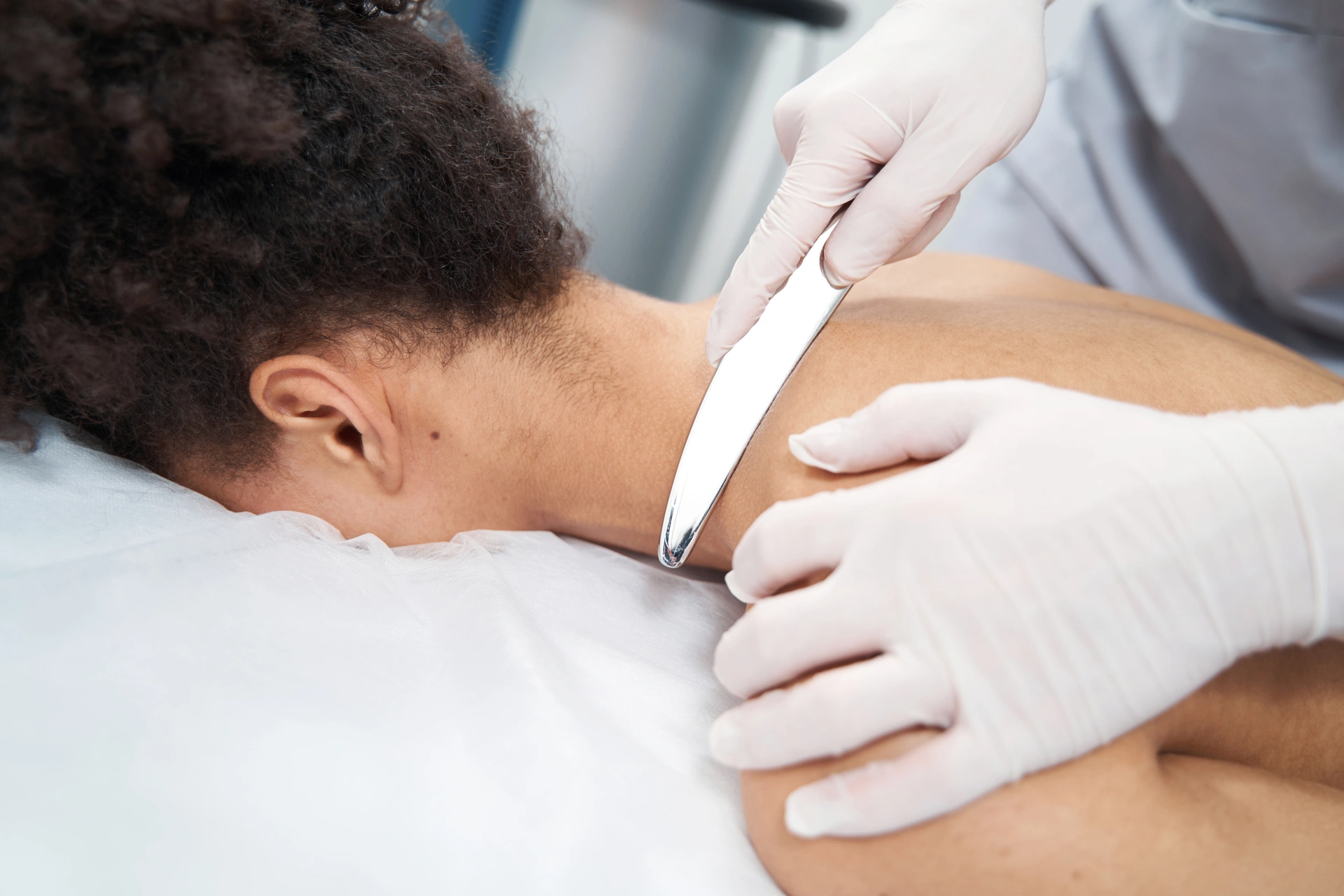
It is an instrument-assisted soft tissue mobilization method, often called IASTM. It uses contoured stainless steel tools that glide over the skin to locate and treat tight, sensitive, thickened, or restricted tissue.
Healed scar tissue may feel thick, tight, sensitive, or restricted after cuts, strains, tears, and other injuries. Treatment may help improve tissue movement once the area has healed enough for treatment.
Tissues near a surgical area may become stiff during recovery. Once suitable for your healing stage, the Graston Technique may support scar mobility, tissue glide, and comfortable movement.
Tight muscles and fascia may cause soreness, stiffness, pulling, or limited mobility. Treatment may improve tissue flexibility when combined with stretching, strengthening, and movement retraining.
Desk work, driving, posture habits, stress, sports, and previous injuries may create tightness through the neck, chest, shoulders, and upper back, affecting turning, reaching, lifting, and overhead movement.
Repeated gripping, typing, lifting, pulling, or tool use may irritate the elbow and tighten the forearm. Instrument-assisted care may improve tissue mobility alongside wrist, forearm, and grip exercises.
Some wrist and hand symptoms may be affected by tight tissue in the hand, forearm, shoulder, or neck. Treatment may support the soft tissue movement needed for typing, gripping, lifting, and tool use.
Heel, arch, or Achilles discomfort may involve restrictions in the calf, foot, or surrounding connective tissue. Treatment may be combined with ankle mobility, calf strengthening, balance work, and activity guidance.
Restrictions around the hip, outer thigh, hip flexors, or hamstrings may affect walking, running, cycling, bending, squatting, and climbing stairs.
Tightness in the quadriceps, hamstrings, calves, hips, or lower-leg tissues may affect knee and shin comfort, while exercise supports movement control and activity tolerance.
Soft tissue stiffness and guarding may remain after ankle swelling has improved. The Graston Technique may support ankle mobility as part of strengthening, balance exercises, and walking retraining.
Work, sports, lifting, gripping, running, and repeated training may overload soft tissues. Instrument-assisted treatment may support tissue mobility while exercise and activity planning help build strength and tolerance.
Long periods of sitting, driving, phone use, or computer work may create tightness in the neck, shoulders, upper back, hips, and forearms, often paired with posture guidance and strengthening.
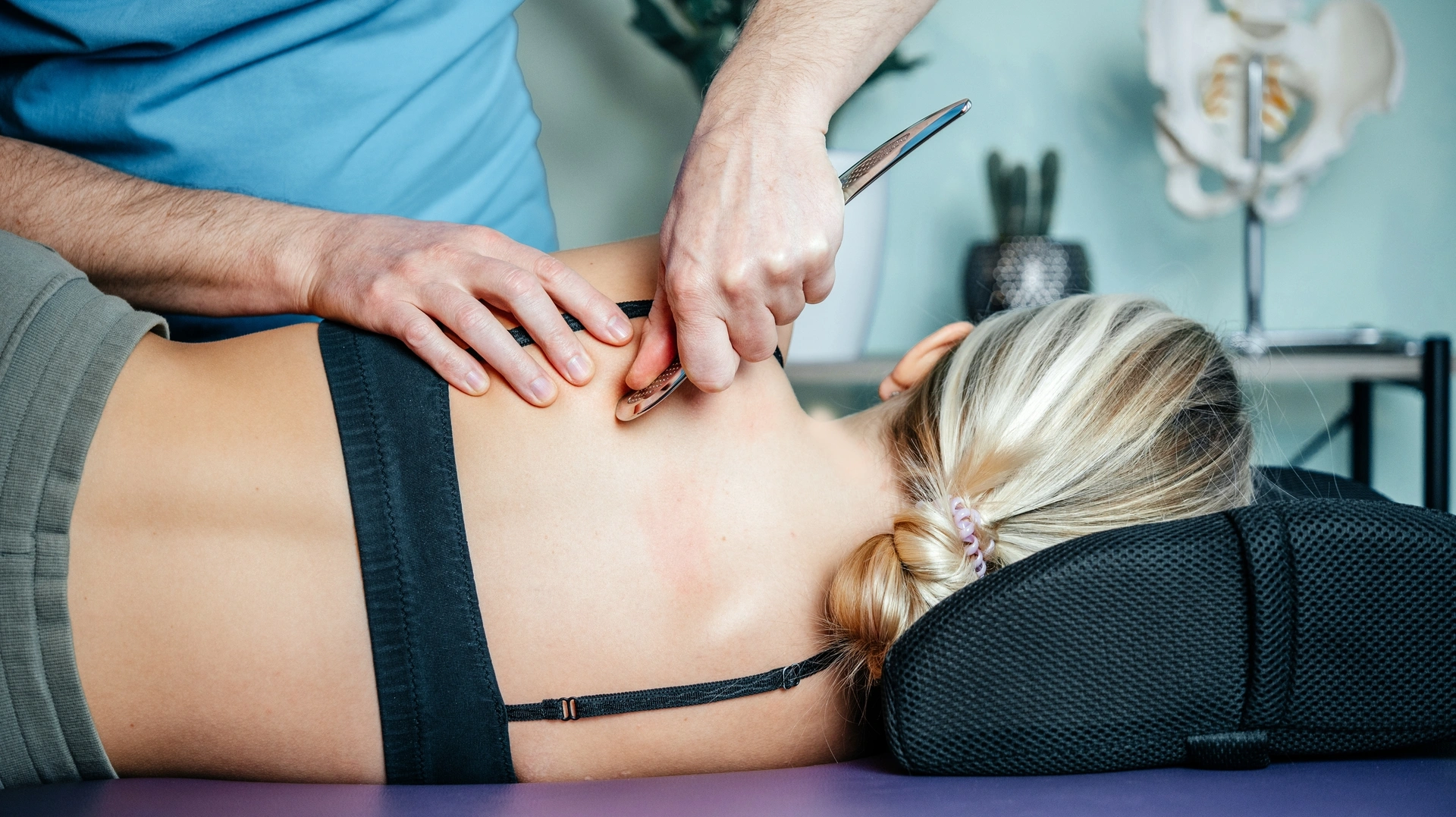
Your physiotherapist glides a specially contoured stainless steel instrument over the treatment area using controlled pressure and a specific angle. As the tool moves across your skin, it picks up on subtle changes in texture, catching, dragging, or grittiness that point to areas of tight, thickened, or restricted tissue beneath the surface. This feedback helps your physiotherapist pinpoint exactly where treatment is needed, rather than working broadly across the whole area.
Your physiotherapist reviews your symptoms, injuries, surgeries, activities, work demands, movement, strength, posture, scars, and tissue tightness to determine whether the Graston Technique Calgary fits your situation.
Gentle movement, exercise, heat, or hands-on treatment may be used to prepare the area before instrument-assisted work begins.
A stainless steel tool is moved over the tissue. You may feel pressure, warmth, vibration, mild scraping, or a grainy feeling as restricted areas are identified and treated. Pressure is adjusted throughout for your comfort.
Hands-on joint and soft tissue work may be paired with instrument-assisted treatment to further support mobility, especially around areas with both joint stiffness and soft tissue restriction.
Treatment is followed by mobility exercises, stretching, strengthening, or functional movement, along with home exercises and activity advice to help maintain your progress.
Treatment should remain tolerable throughout.
With a personalized plan, patients often notice:
Yes, it is safe when provided by a trained physiotherapist following a proper assessment.
The Graston Technique Calgary is provided as part of Physiotherapy Care at East Hills Physiotherapy and may be covered through:
Your physiotherapist reviews mobility, strength, scar tissue, and daily demands before treatment begins.
Instrument-assisted care may be combined with exercise, mobility work, manual therapy, and home guidance.
Pressure and treatment time are adjusted to your tolerance throughout every visit.
Care may help with injury recovery, repetitive strain, sports concerns, and post-surgical stiffness.
Direct billing may be available for eligible extended health, WCB Alberta, and motor vehicle accident claims.
Google Ratings
Based on 302 Reviews
Scar tissue, muscle tightness, and soft tissue restrictions can affect work, exercise, and everyday movement. Our Graston Technique Calgary offers a personalized physiotherapy plan to support soft tissue mobility, range of motion, and daily function.
Whether you’re recovering from injury, managing repetitive strain, or rebuilding movement after surgery, your care is matched to your comfort and goals.
Book your Graston Technique appointment in Calgary with East Hills Physiotherapy today.

PT/Clinic Director

Physiotherapist

Physiotherapist
It is a form of instrument-assisted soft-tissue mobilization that uses contoured stainless-steel tools to work with scar tissue, tight fascia, muscle tension, and movement restrictions during physiotherapy care.
Graston therapy may be used to improve soft-tissue mobility, reduce stiffness, support scar movement, address tendon or fascial restrictions, and make stretching, strengthening, work, sport, or daily movement more comfortable.
Yes. The Graston Technique is a form of instrument-assisted soft-tissue mobilization, often called IASTM. It uses shaped stainless-steel instruments to apply controlled pressure over selected muscles, tendons, fascia, and scars.
A physiotherapist glides a stainless-steel instrument over selected tissue using controlled pressure. The tool helps identify areas of restriction and may support tissue movement before stretching, strengthening, or functional exercise.
Stainless-steel tools provide clear feedback about tissue texture and allow controlled pressure over restricted areas. Their shape helps the physiotherapist work with muscles, tendons, fascia, and healed scars more precisely.
You can consider the Graston Technique when scar tissue, muscle tightness, tendon irritation, repetitive strain, sports injuries, or stiffness affect daily movement. East Hills Physiotherapy in Calgary offers personalized treatment based on your needs.
The Graston Technique may support movement around healed scar tissue by applying controlled pressure over restricted areas. Treatment is usually combined with stretching, strengthening, mobility work, and activity-based rehabilitation.
Graston therapy does not literally remove tissue, but it may help improve glide between restricted soft-tissue layers. Your physiotherapist combines instrument-assisted care with movement and exercise to support functional mobility.
The Graston Technique may support fascial mobility when connective tissue feels tight, thickened, or restricted. Treatment may make stretching, strengthening, reaching, bending, walking, or sport-related movement feel more manageable.
Graston therapy may improve the comfortable range of motion when soft-tissue restrictions limit movement. Mobility exercises, stretching, strengthening, and home guidance help your body maintain and use those changes afterward.
Graston therapy may be considered when recurring muscle tightness, repetitive strain, posture habits, or reduced activity limits movement. Your physiotherapist first assesses tissue sensitivity, mobility, strength, comfort, and daily demands.
The Graston Technique may support scar mobility and soft-tissue movement after surgery when the area has healed sufficiently. Treatment timing depends on medical guidance, skin condition, sensitivity, swelling, and recovery stage.
.
A grainy, rough, or uneven sensation may occur as the instrument moves over restricted or sensitive tissue. Your physiotherapist uses this feedback alongside movement findings and adjusts pressure according to your comfort.
Graston therapy may support scar restrictions, muscle tightness, tendon concerns, plantar fascia discomfort, elbow strain, Achilles tightness, shoulder stiffness, ankle restrictions, sports injuries, and repetitive work-related tension.
The Graston Technique may support tissue mobility around the plantar fascia, calf, and foot. Care may also include ankle mobility, foot strengthening, calf exercises, footwear guidance, and gradual activity changes.
Graston therapy may help improve soft-tissue mobility around the outer elbow and forearm. Treatment is commonly paired with grip exercises, wrist strengthening, load planning, and changes to repetitive activities.
The Graston Technique may support tissue movement around the inner elbow and forearm. Care may also include strengthening and guidance for gripping, pulling, lifting, swinging, typing, or tool use.
Graston therapy may support movement through the calf and Achilles area when surrounding tissue feels restricted. Your care may also include ankle mobility, calf strengthening, balance exercises, and walking guidance.
The Graston Technique may help address soft-tissue restrictions around the shoulder, chest, upper back, and rotator cuff area. Treatment may support more comfortable reaching, lifting, dressing, and overhead movement.
Graston therapy may support tissue mobility around the outer hip and thigh. Care is often combined with hip strengthening, mobility exercises, running guidance, and changes to repeated training loads.
.
Your first visit includes a review of symptoms, injuries, surgeries, activities, movement, strength, scars, posture, and tissue sensitivity. Your physiotherapist then discusses whether instrument-assisted treatment suits your current needs.
The Graston Technique may feel like pressure, warmth, vibration, mild scraping, or tenderness over restricted tissue. Your physiotherapist adjusts the instrument angle, pressure, speed, and treatment time throughout your session.
Treatment should remain manageable. Some restricted areas may feel tender or sensitive, but the pressure can be changed. Tell your physiotherapist immediately when anything feels sharp, overwhelming, or increasingly uncomfortable.
Temporary redness may occur because instrument-assisted treatment increases local tissue stimulation and circulation. The colour usually settles after treatment, although response varies with skin sensitivity, pressure, and treatment duration.
Minor bruising can occur, but treatment should not be unnecessarily aggressive. Tell your physiotherapist if you bruise easily, take blood-thinning medication, or notice an unexpected skin or tissue response.
Instrument-assisted treatment usually takes only part of a physiotherapy appointment. The remaining time may include assessment, movement testing, manual therapy, stretching, strengthening, education, and home exercise guidance.
The Graston Technique can be safe when provided after a physiotherapy assessment. Treatment is adjusted according to your health history, skin condition, tissue sensitivity, symptoms, comfort, and recovery goals.
Treatment may be avoided or modified around open wounds, active infections, unexplained swelling, certain bleeding concerns, recent surgery without clearance, fragile skin, highly sensitive tissue, or an early injury.
Tell your physiotherapist if you take blood-thinning medication or bruise easily. Instrument pressure, treatment time, and area selection may need changes, or another physiotherapy approach may be recommended instead.
After treatment, gentle movement, hydration, and your recommended exercises are often helpful. You may receive stretching, strengthening, mobility drills, or temporary activity changes based on the treated area and response.
Light movement is often suitable after treatment. Intense exercise may need temporary adjustment when the area feels tender. Your physiotherapist provides activity guidance based on your symptoms, goals, and tissue response.
Treatment frequency depends on the area, tissue sensitivity, activity demands, symptom duration, and response. Your physiotherapist reviews movement and comfort regularly before recommending another session or changing your care plan.
No. The Graston Technique uses stainless-steel tools for targeted soft-tissue mobilization, while massage therapy uses hands-on pressure and movement for muscle tension, circulation, relaxation, tissue comfort, and general wellness.
Muscle scraping is an informal term sometimes used for instrument-assisted soft-tissue care. The Graston Technique follows a structured treatment approach and is included within a broader physiotherapy and exercise plan.
The Graston Technique uses instruments to mobilize soft tissue, while manual therapy commonly uses hands-on joint and tissue techniques. Both services may be included within one personalized physiotherapy program when appropriate.
No. The Graston Technique applies controlled pressure using stainless-steel instruments, while cupping uses suction to lift tissue. The two methods create different sensations and are selected for different care goals.
No. Graston therapy works over the skin using stainless-steel instruments, while dry needling uses thin, sterile needles within selected muscle areas. Both may support movement through different treatment approaches.
Yes. Instrument-assisted care may improve tissue mobility, while exercise helps build strength, control, flexibility, and activity tolerance. Combining both services connects treatment changes with walking, lifting, work, sport, or daily movement.
The Graston Technique may support soft-tissue mobility after sports-related strain, overuse, or restricted movement. Care may also include strengthening, stretching, load planning, and gradual return-to-sport exercises for your activity.
Graston therapy may support runners experiencing calf tightness, hamstring restrictions, Achilles tension, plantar fascia discomfort, or outer-thigh tightness. Treatment is commonly paired with strengthening, mobility work, and running guidance.
Desk workers may experience tightness in the neck, shoulders, upper back, forearms, wrists, and hips. Instrument-assisted treatment may be combined with posture guidance, mobility exercises, strengthening, and regular movement breaks.
Graston therapy may support tissue mobility when repeated gripping, typing, lifting, reaching, running, or tool use causes restriction. Treatment may also include ergonomic guidance, strengthening, mobility work, and activity changes.
Instrument-assisted treatment may be included after a motor vehicle accident when healed soft-tissue restrictions, shoulder tension, neck tightness, or movement limitations remain. Timing depends on your injuries and recovery stage.
Graston therapy may be included in workplace injury physiotherapy when soft-tissue restrictions, repetitive strain, tendon concerns, or movement limits affect job duties. Strengthening and work-related movement practice are commonly added.
Many Alberta extended health plans may cover the Graston Technique when provided within a physiotherapy appointment. Annual limits, referral rules, per-visit amounts, and eligible services vary between individual insurance policies.
Direct billing may be available for participating insurance plans, depending on your provider, policy, and clinic arrangements. Bring your insurance details so our administration team can review available billing options.
You generally do not need a physician referral to book physiotherapy or the Graston Technique in Calgary. However, some insurance plans may request one before reimbursing your eligible treatment costs.
Yes. Many people book because they feel tight, restricted, or sore without knowing why. Your physiotherapist assesses movement, strength, posture, tissue sensitivity, injury history, activities, and daily limitations.
Graston therapy may be considered when healed scar tissue, soft-tissue restriction, stiffness, or reduced mobility from an older injury still affects work, exercise, sport, sleep, or everyday movement.
East Hills Physiotherapy provides instrument-assisted care within personalized physiotherapy. We assess your movement, tissue sensitivity, comfort, activities, and goals, then combine treatment with exercise, mobility work, and practical home guidance.
Ramesh was incredibly friendly and immediately pinpointed the issue. Thanks to his guidance, my recovery has already improved. The rest of the staff are just as welcoming, and the whole center has a really positive atmosphere.
I have been taking physio from suchi gidwani she s been helping me a lot with my pain staff is great . Highly recommend
Had physiotherapy consultation for shoulder movement with Ramesh Bigmagani. It was great experience and had good improvement.