

Despite tremendous workplace safety improvements imposed by government regulations in Canada and Alberta, along with industry initiatives in recent years, occupational injuries still occur. Our East Hills Physiotherapy provide workplace injuries physiotherapy in Calgary to help you recover and get back to your job with confidence. When required and properly authorized, we may also communicate with your physician, employer, and Workers’ Compensation team to support recovery, return-to-work planning, and steps that may reduce the chance of the injury happening again.
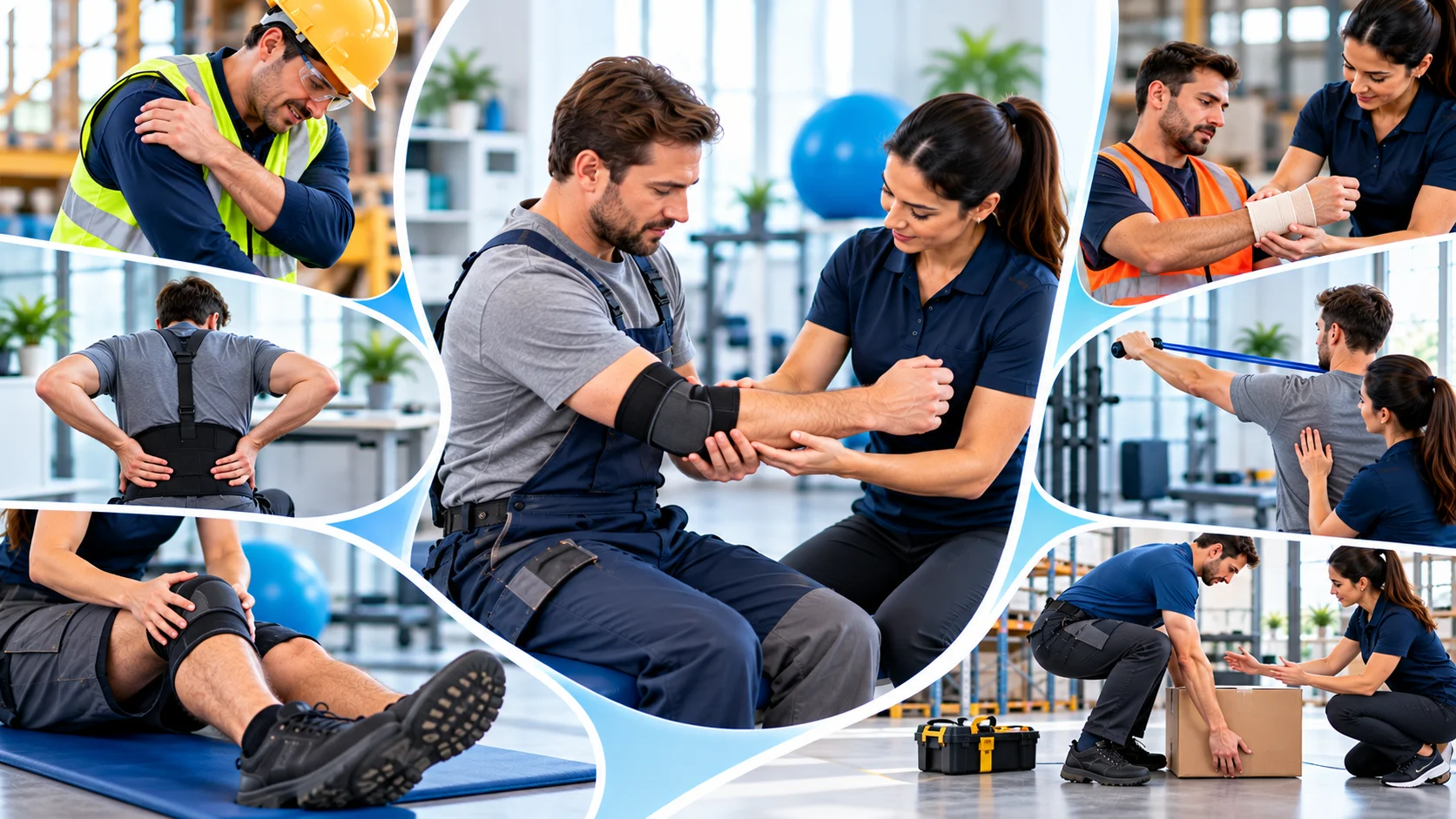
Workplace injury physiotherapy is rehabilitation for physical concerns that happen or worsen while performing job duties.
An injury may result from a single incident, such as a fall or lifting accident, or develop gradually through repeated movements, awkward posture, vibration, prolonged sitting, or sustained physical demands.
Your program may address:
Our goal is to help you restore movement, rebuild physical capacity, and return gradually to suitable work and daily activities.
Workplace injuries physiotherapy at our clinic covers a wide range of job-related injuries, including
Lifting, carrying, or working in awkward postures strains the muscles and joints of the back and neck. This is one of the most common workplace injuries we see, whether it comes from a single heavy lift or from repeated strain over time.
Repetitive reaching, overhead work, or pushing and pulling can irritate the shoulder joint and surrounding muscles. Left untreated, this often limits your ability to lift, reach, or carry items comfortably on the job.
Tasks that involve repeated wrist, elbow, or hand movement, such as typing, gripping, or assembly work, can lead to tendon and muscle irritation over time. These injuries tend to build gradually rather than happen all at once.
Prolonged standing, kneeling, or repeated motion throughout a shift can wear on muscles and joints over time. These injuries respond well to a plan that addresses both the pain and the task causing it.
Sudden or forceful movement, such as a quick reach or an unexpected load, can strain a muscle or sprain a ligament. We treat the injury while working to rebuild the strength needed for your role.
Falls at work can cause anything from a mild strain to a more significant injury affecting your back, wrists, knees, or ankles. Treatment focuses on your specific injury and your return to safe movement.
Your treatment begins with a musculoskeletal assessment, so your physiotherapist understands exactly what is driving your pain and how it connects to the tasks your job requires. From there, we draw on the full range of techniques available at our physiotherapy clinic and combine the ones that fit your injury into a single treatment plan.
Manual therapy is often the starting point, using joint mobilization and soft tissue work to decrease inflammation, ease muscle tension, and restore movement in the injured area. For back and neck injuries, spinal manipulation may be added to reduce pain and improve function through controlled, hands-on pressure applied to the spine or a joint.
When trigger points or persistent muscle tightness are part of the picture, dry needling helps release that tension and calm referred pain, particularly for injuries affecting the neck, shoulders, and back.
For injuries involving scar tissue or soft tissue restrictions, we may use the Graston Technique, applying stainless steel instruments alongside therapeutic exercise to address fibrosis and long-standing inflammation. Massage therapy is often included as well, supporting circulation, reducing muscle tension, and easing discomfort from repetitive strain or prolonged postures on the job.
Therapeutic exercise runs through every stage of your recovery, starting with gentle movement to protect the injured area and progressing to strength and conditioning work that matches your specific job tasks, whether that means lifting, reaching, or repetitive motion.
Where needed, electrotherapy supports pain relief and muscle activation, and custom-fit orthotics may be included for workplace injuries affecting your feet, ankles, or lower back.
A functional capacity evaluation looks at what your body can safely do compared with the physical demands of your job, from lifting and carrying to standing, bending, and repetitive tasks. We use this evaluation to help you and your physician make informed back-to-work decisions, giving everyone involved an objective picture of your current ability.
Alongside hands-on treatment, we look at the tasks and setup behind your injury, from the chair you sit in to the equipment you use throughout your shift. Identifying what is placing unnecessary strain on your body helps guide small adjustments to posture, positioning, or task setup that support both your recovery and your risk of re-injury once you are back on the job.
Your progress in the clinic feeds directly into your functional capacity evaluation and work ergonomics recommendations, so the techniques we use connect to real decisions about your return to work. Your physiotherapist adjusts the combination of techniques as your body responds, working toward the same goal throughout: reducing your pain, rebuilding your function, and preparing you to return to your job safely.
Starting treatment early often supports a better, faster recovery, since waiting can allow stiffness or compensation patterns to build.
Physical demands vary by role, from lifting in the warehouse and trades work to prolonged sitting in office jobs. Your exercises are tailored to your specific tasks.
Where appropriate, your physiotherapist supports a graduated return to work, recommending modified duties while your strength continues to build, coordinated with your employer and Workers’ Compensation team.
We keep clear records of your symptoms and progress at each visit, supporting your claim and keeping your physician and case manager informed.
Your progress feeds directly into your functional capacity evaluation and ergonomics recommendations, so treatment connects to real decisions about getting you back to your job safely.
Here is what to expect when you choose our physiotherapy clinic for your workplace injury recovery:
Here is what you should know about coverage for a workplace injury:
A workplace injury does not have to mean a long, uncertain road back to your job. At East Hills Physiotherapy, workplace injuries physiotherapy in Calgary is built around your injury, your job, and your recovery timeline, with your physician and Workers’ Compensation team involved every step of the way.
From functional capacity evaluations to work ergonomics guidance, we focus on getting you back to your role safely and helping prevent the injury from happening again. If a workplace injury has been affecting your daily life, reach out to East Hills Physiotherapy today to book your assessment.
Call our East Hills Physiotherapy clinic or request an appointment online, and let’s build a recovery plan that works for you and your job.

Ramesh has practised physiotherapy since 2000 and supports people with musculoskeletal injuries, neurological conditions, back and neck pain, sports injuries, vestibular concerns, and movement restrictions. His care may include manual therapy, spinal manipulation, acupuncture, dry needling, myofascial release, exercise planning, gait support, and foot assessments.

Harmandeep works with spine, hip, knee, shoulder, orthopedic, sports-related, and work-related movement concerns. His approach may include functional assessment, manual therapy, strengthening, taping, myofascial release, and patient education.

Aanchal supports people with muscle tension, core weakness, jaw concerns, pelvic health needs, and movement restrictions. Her care may include manual therapy, dry needling, mobility work, breathing, and functional strengthening.

Suchi brings more than 13 years of physiotherapy experience and supports people with musculoskeletal injuries, mobility limitations, and physical work demands. Her care may include manual therapy, dry needling, strengthening, and functional rehabilitation.

Janki provides warm, personalized massage therapy for muscle tension, stress, and everyday physical strain. Her calm approach helps clients feel comfortable, relaxed, and supported throughout each session.

Suaad offers gentle, tailored massage therapy for physical tension, fatigue, and stress-related discomfort. Her caring approach creates a calm environment focused on comfort, relaxation, and individual needs.

Jerome provides myofascial release, trigger point care, lymphatic drainage, headache support, and relaxation massage. His nursing background and multilingual skills support attentive, thoughtful care for a wide range of concerns.
Workplace injury physiotherapy supports recovery from job-related strains, sprains, pain, weakness, and movement limitations. Care may include exercise, manual therapy, ergonomic guidance, functional training, and gradual return-to-work planning based on your duties and goals.
It is physiotherapy for injuries caused or aggravated by work. Treatment considers your symptoms, movement, strength, job demands, restrictions, and recovery goals while helping you rebuild capacity for suitable duties.
Work-related injuries may result from lifting, carrying, pushing, pulling, falls, repeated gripping, awkward posture, prolonged sitting, driving, overhead work, or sudden twisting. Symptoms appear immediately or develop gradually over several days.
Consider an assessment when pain, stiffness, weakness, swelling, numbness, reduced movement, or balance changes interfere with your duties, sleep, driving, exercise, household tasks, or confidence at work during the workday.
Even minor workplace incidents can strain muscles, joints, tendons, or ligaments. An assessment may identify movement changes and help you understand suitable activity, temporary limitations, and practical recovery steps clearly.
Yes. Repetitive tasks such as typing, gripping, lifting, scanning, tool use, or assembly work can irritate tissues over time. Physiotherapy may support mobility, strength, pacing, and ergonomic changes for daily work.
East Hills Physiotherapy provides workplace injury care in Southeast and Northeast Calgary. We assess your symptoms, movement, strength, balance, and job demands before creating a plan around your recovery goals.
Your first visit includes a review of how the injury occurred, your symptoms, job duties, restrictions, health history, and recovery goals. We may assess movement, strength, balance, posture, and functional tasks.
Bring your WCB claim information, employer details, accident date, medical documents, medication list, and current work restrictions. Wear comfortable clothing that allows us to assess movement and affected areas during your appointment.
A functional assessment reviews how your mobility, strength, balance, endurance, grip, lifting, carrying, pushing, or walking compares with daily and workplace demands. Findings help guide rehabilitation and return-to-work planning for you.
Hands-on treatment may support joint mobility, reduce muscle guarding, and improve soft-tissue movement. Techniques are selected according to your injury stage, comfort, symptoms, work requirements, and broader rehabilitation plan over time.
Exercise helps rebuild mobility, strength, endurance, balance, and confidence. Your program may include core work, shoulder exercises, leg strengthening, grip training, lifting preparation, walking, and task-based movement practice for work.
Dry needling or acupuncture may be included when pain or muscle tension limits movement. These options are used within a broader plan that also includes exercise, education, and functional rehabilitation.
Instrument-assisted soft-tissue care or massage therapy may support tissue mobility and comfort when suitable. Your physiotherapist decides how these services fit with strengthening, mobility work, and workplace movement practice during recovery.
Return-to-work physiotherapy helps rebuild the movement, strength, endurance, balance, and confidence needed for suitable duties. Your program reflects current restrictions, job demands, symptom response, and approved workplace arrangements over time.
Modified duties may reduce hours, lifting, standing, walking, reaching, or repeated movements while you recover. Recommendations depend on your injury, physical findings, medical guidance, employer options, and WCB approval when applicable.
Returning too quickly may aggravate symptoms, while avoiding activity for too long can contribute to weakness and reduced confidence. A gradual plan helps increase work demands according to your tolerance.
Ergonomic guidance may address chair height, screen position, keyboard placement, lifting setup, tool use, reaching, standing, and movement breaks. Recommendations are tailored to your tasks, workspace, symptoms, and recovery needs.
Physiotherapy may reduce reinjury risk by improving strength, mobility, endurance, lifting technique, body awareness, and task tolerance. We also discuss pacing, posture, equipment setup, and practical changes for your workday.
Lifting retraining may review foot position, load placement, grip, breathing, trunk control, and carrying distance. Practice begins with manageable loads and progresses according to your symptoms, confidence, and job demands.
Office workers may benefit from posture guidance, workstation changes, movement breaks, neck and shoulder exercises, wrist support, and gradual sitting tolerance. The plan reflects your schedule, symptoms, and equipment needs.
Contact East Hills Physiotherapy and share your injury date, symptoms, job duties, WCB claim information, employer details, and preferred Calgary location. Our administration team will explain the booking documents required.
You may book an assessment while claim details are being clarified, but billing arrangements depend on authorization. Speak with our administration team and your WCB representative before assuming treatment costs are covered.
You may be able to transfer workplace injury care, depending on claim approval and paperwork. Contact your WCB representative and our administration team to confirm authorization, records, and billing requirements first.
Direct billing may be available for approved workplace claims or participating extended health plans. Availability depends on authorization, policy terms, claim status, submitted documents, and current clinic billing arrangements at booking.
East Hills Physiotherapy provides personalized workplace rehabilitation based on your injury, movement, job duties, restrictions, and goals. Care may include exercise, manual therapy, functional training, ergonomic guidance, and WCB communication.
Your program progresses from symptom management toward mobility, strength, endurance, balance, and job-related activity. Return-to-work planning considers current restrictions, functional tolerance, medical guidance, and approved duties at each stage carefully.
The goal is to restore movement, rebuild work capacity, improve confidence, and support a sustainable return to suitable duties. We also address movement habits and physical demands that may contribute to reinjury.
Work-related back pain may follow lifting, bending, twisting, prolonged sitting, or repeated physical tasks. Physiotherapy may include mobility exercises, strengthening, hands-on care, posture guidance, and gradual work-related movement practice during recovery.
Neck or shoulder pain may develop from computer use, driving, overhead work, repeated reaching, or manual labour. Care may support mobility, strength, posture, lifting, carrying, and comfortable work positions again.
Repeated typing, gripping, scanning, vibration, lifting, or tool use can affect the wrist, hand, forearm, or elbow. Physiotherapy may support joint movement, tissue mobility, grip strength, and task tolerance at work.
Slips, falls, twisting, kneeling, heavy lifting, or prolonged standing may affect the hip, knee, ankle, or foot. Rehabilitation may include mobility, strengthening, balance work, and gait retraining for safer movement.
Sprains and strains can occur during sudden movement, lifting, reaching, pushing, pulling, or a fall. Treatment is adjusted to swelling, pain, tissue sensitivity, movement tolerance, and job demands during recovery.
A workplace fall may affect several areas, including the back, shoulder, wrist, hip, knee, ankle, or head. We assess mobility, balance, strength, walking, and daily function before planning care with you.
Workers who drive may experience neck pain, back stiffness, shoulder tension, dizziness, or lower-body injuries after a collision. Care may include mobility, strengthening, vestibular support, and return-to-driving guidance when appropriate.
Approved workplace injury physiotherapy may be covered by WCB Alberta. Coverage depends on claim acceptance, authorization, injury details, reporting requirements, visit limits, and the treatment arrangements confirmed for your case.
A physician’s referral is generally not required to book physiotherapy, but WCB or another payer may request medical information. Confirm claim requirements and bring any referral, restrictions, or reports you receive.
Report the injury to your employer promptly and follow the claim steps provided by WCB Alberta. Early reporting helps create a clear record and may prevent delays with authorization, paperwork, or treatment.
Direct billing may be available for approved WCB claims, depending on authorization, claim status, clinic arrangements, and required documents. Our administration team can review the information needed before billing begins.
You may need your WCB claim number, employer information, injury date, worker details, medical documents, and current restrictions. Additional forms or reports may be requested as your workplace rehabilitation progresses.
With your consent and proper authorization, we may provide assessment findings, treatment plans, progress information, functional updates, or requested reports to your physician, employer, or Workers’ Compensation representative when required.
Coverage is not automatic, so confirm claim approval, visit limits, required reports, and unpaid amounts with WCB. You remain responsible for costs that are not authorized or covered under your arrangement.
Recovery time depends on the injury, symptom duration, physical demands, health history, claim requirements, and participation in care. Some people improve within weeks, while others need a longer rehabilitation period.
Home exercises may include mobility, strengthening, balance, posture, grip, or functional movement activities. Your physiotherapist explains frequency, technique, precautions, and how to adjust the program when symptoms change during recovery.
Mild, temporary soreness can occur after exercise or hands-on treatment as your body adapts. Sharp, spreading, severe, or worsening symptoms should be reported so your physiotherapist can modify the plan.
Many people continue working with suitable adjustments while receiving physiotherapy. Your plan may include pacing, movement breaks, posture changes, reduced lifting, modified tasks, or exercises matched to your duties safely.
Workplace injuries can also affect sleep, driving, exercise, household tasks, and family responsibilities. Physiotherapy considers these daily limitations so recovery supports more than your return to paid employment each day.
Physiotherapy may support an older workplace injury when pain, stiffness, weakness, or reduced mobility still affects work and daily life. Current movement and function guide the plan, not only injury age.
Recurring pain may relate to unresolved weakness, limited mobility, repeated job demands, pacing, or ergonomic factors. A reassessment can help identify current movement concerns and update your home and workplace strategies.
I have been seeing Aanchal for my physio sessions since my car accident. Her knowledge and experience helped us through our difficult time. Great team and truly humble!
Highly recommend!! I have been attending physio after my knee surgery with Ramesh to which he has been amazing to help me with my recovery. Always giving me the encouragement with every visit. Duda the physiotherapist assistant absolutely outstanding with her positive attitude and very helpful!! Every visit they both welcome me and always ask my concerns. Magic with healing my pain. 😁
My first time experiencing i was happy, going back again.Thank you to all the team especially to Aanchal.
I have been seeing Ramesh for physiotherapy for quite a few injuries and he’s helped a lot with relief and mobility. Highly recommended!
I highly recommend this physiotherapy clinic, the staff are amazing, very accommodating, booking is very easy, and it's always clean inside. Ramesh and his team are always very welcoming, professional and very helpful. They all making the healing process a very positive one.