

- Home
- Sports Injury Physiotherapy in Calgary
Sports Injury Physiotherapy in Calgary
Personalized Sports Injury Rehabilitation
Book Your Appointment
Physiotherapy for Every Level of Athlete
- Are you dealing with pain after a sports injury and wondering when you can return to activity?
- Did a sprain, strain, fracture, or repeated movement problem stop you from enjoying your sport?
East Hills Physiotherapy provides sports injury physiotherapy in Calgary for athletes, recreational players, runners, golfers, gym users, and active adults. Whether your injury happened suddenly or developed through repeated training, your care focuses on restoring movement, rebuilding strength, improving control, and helping you return to your favourite sport as quickly as possible.
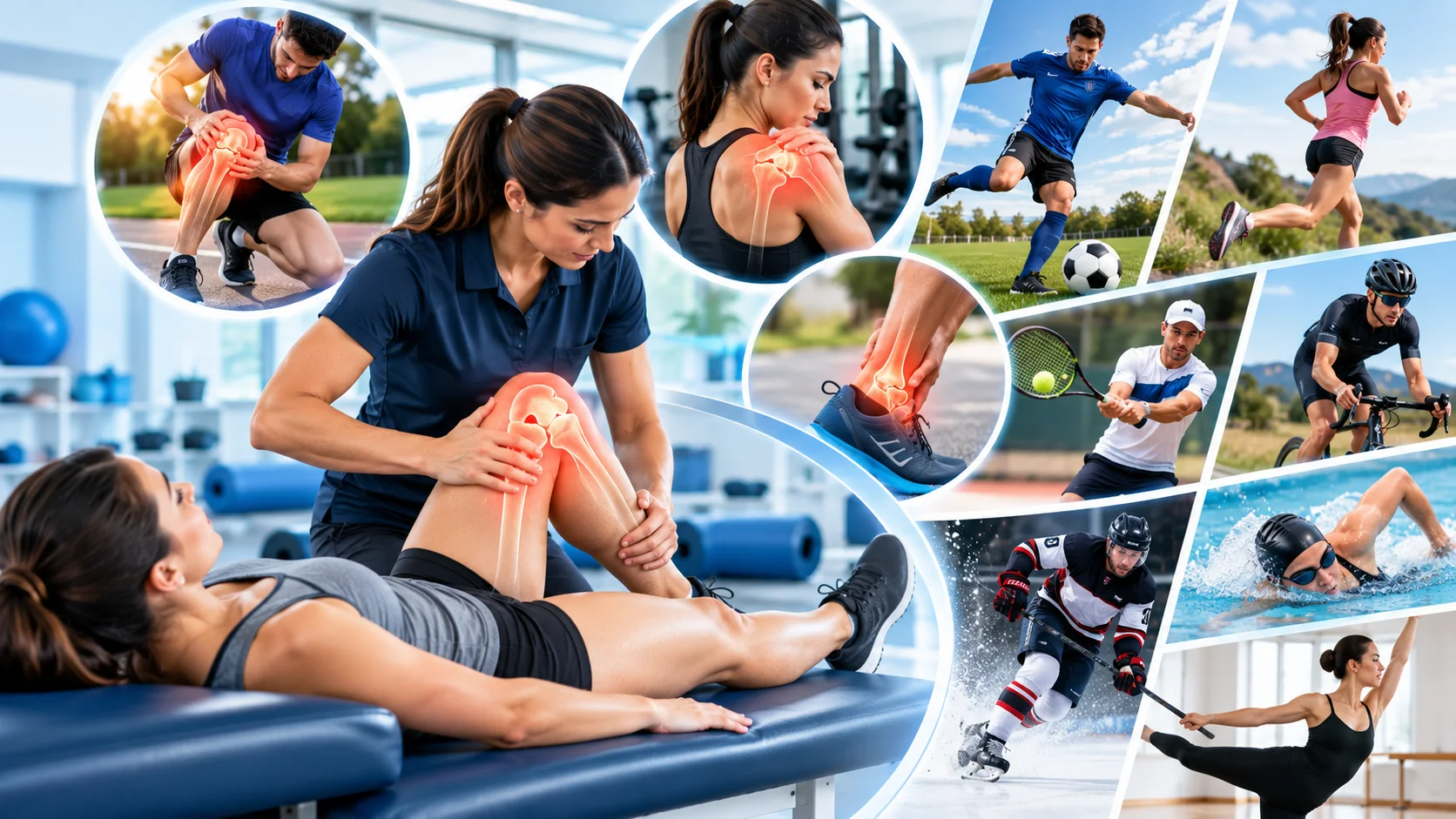
What Is Sports Injury Physiotherapy?
Sports injury physiotherapy supports recovery from injuries related to exercise, training, competition, recreation, or physically demanding activity.
These concerns may affect:
- Muscles
- Tendons
- Ligaments
- Joints
- Bones
- Nerves
- Balance
- Coordination
- Walking or running mechanics
Your physiotherapist looks beyond the painful area to understand how your body moves as a whole. For example, knee discomfort may be influenced by hip control, ankle mobility, training volume, or running mechanics. Shoulder pain may involve posture, shoulder-blade movement, rotator cuff strength, or repeated overhead loading.
Who Benefits From Sports Physiotherapy?
Sports physiotherapy is not limited to competitive athletes. We support:
- Recreational players
- Runners and walkers
- Golfers
- Hockey and soccer players
- Basketball and volleyball players
- Cyclists
- Swimmers
- Dancers
- Martial artists
- Gym users
- Youth athletes
- Older adults
- People returning after surgery
- People rebuilding a movement after a fracture
Your rehabilitation reflects the demands of your activity. A runner with shin discomfort needs a different progression from a golfer with shoulder stiffness or a hockey player recovering from a groin strain.
Conditions We Treat With Sports Injury Physiotherapy
Sprains and Strains
Sprains affect ligaments, while strains involve muscles or tendons. They may cause pain, swelling, bruising, weakness, stiffness, or difficulty moving after twisting, reaching, lifting, landing, or sudden direction changes.
Fractures and Post-Fracture Recovery
After medical care, casting, bracing, or surgery, physiotherapy may help restore mobility, strength, balance, and confidence once healing allows, following any limits provided by your medical team.
Runner's Knee and Patellar Tendon Pain
Pain around the kneecap or patellar tendon may affect runners, jumpers, cyclists, hikers, and gym users. Care may address hip strength, knee control, ankle mobility, training load, footwear, and movement habits.
Knee Ligament and Meniscus Injuries
Pivoting, twisting, landing, contact, or sudden stopping may affect the knee ligaments or meniscus. Rehabilitation may improve movement, stability, strength, coordination, and confidence during running or direction changes.
Tennis Elbow and Golfer's Elbow
Repeated gripping, swinging, lifting, or wrist movement may irritate tissues around the elbow. Treatment may include forearm strengthening, mobility work, grip exercises, soft tissue care, and activity changes.
Shoulder and Rotator Cuff Injuries
Throwing, swimming, swinging, lifting, overhead activity, or falls may affect the rotator cuff and surrounding shoulder tissues, causing pain, weakness, night discomfort, limited reaching, or reduced arm control.
Shoulder Instability
Contact sports, falls, throwing, or sudden arm movements may cause instability, clicking, catching, weakness, or reduced confidence. Rehabilitation focuses on controlled mobility, shoulder-blade movement, strength, and a gradual return to sport.
Ankle Sprains
Common in basketball, soccer, volleyball, tennis, running, and dance. Physiotherapy may include ankle mobility, calf strength, balance work, landing practice, and direction-change training.
Achilles Tendon and Calf Injuries
Running, jumping, sprinting, or sudden push-off movements may strain the calf or irritate the Achilles tendon. Care progresses from comfortable movement toward calf loading, balance, running, and jumping preparation.
Plantar Fasciitis and Foot Pain
Heel or arch pain may be linked to calf tightness, training load, foot mechanics, footwear, or lower-body weakness. Treatment may combine tissue mobility, strengthening, gait work, and activity guidance.
Shin Splints
Often affects runners, dancers, and jumping athletes after sudden changes in distance, intensity, surface, or footwear. Rehabilitation may address calf strength, ankle mobility, running mechanics, and training progression.
Hip, Groin, and Hamstring Injuries
Kicking, skating, sprinting, cutting, dancing, or quick acceleration may strain the hip, groin, or hamstrings. Treatment may include gradual strengthening, mobility work, core control, and sport-related drills.
Golfer's Shoulder and Repetitive Strain Injuries
Repeated swinging and rotational movement may irritate the shoulder and surrounding tissues. Treatment includes programs for golfer’s shoulder alongside other repetitive strain injuries affecting the wrist, elbow, and back.
Wrist and Hand Injuries
Falls, racquet sports, climbing, gymnastics, hockey, and weight training may affect grip, lifting, catching, pushing, or weight-bearing through the hand. Care may restore mobility, strength, and control.
Your Sports Injury Treatment Journey
Every sports injury is different, and every athlete has different goals. Your care plan reflects your symptoms, your sport, your activity level, your recovery stage, and what you want to return to.
Assessment
Your first visit includes a review of how the injury happened, your symptoms, previous injuries, training routine, daily limitations, and activity goals. Movement, strength, flexibility, balance, posture, walking, running, or sport-related tasks may be assessed.
Manual Therapy
Hands-on care that helps reduce stiffness, improve joint movement, ease muscle tension, and support more comfortable movement, including joint mobilization, soft tissue mobilization, and range-of-motion techniques.
Spinal Manipulation
Used when appropriate for certain neck or back concerns related to sport, lifting, impact, posture, or repetitive movement. This controlled technique may help improve mobility and reduce discomfort.
Dry Needling
May help reduce muscle tension, improve range of motion, and address trigger points that contribute to pain, often used for neck, back, shoulder, hip, or leg concerns.
Graston Technique
It is used to address soft tissue restrictions, scar tissue, and areas of tightness that affect movement, helpful for repetitive strain injuries and tendon irritation when paired with exercise.
Massage Therapy
This supports sports injury recovery by helping reduce muscle tightness, improve comfort, support circulation, and ease soft tissue restrictions, helpful for athletes dealing with soreness, overuse, or training-related tension.
Vestibular Rehabilitation
Supports athletes recovering from balance-related symptoms following a fall, collision, or head injury, including balance exercises, gaze work, and gradual movement progression.
Therapeutic Exercise and Exercise Prescriptions
Exercise is the foundation of long-term recovery. We provide exercise prescriptions to support healing between visits, including strengthening, mobility work, stretching, balance training, endurance work, and sport-specific drills.
Gait and Balance Retraining
This helps athletes recover after ankle, knee, hip, or foot injuries, including walking pattern support, balance drills, coordination training, and movement confidence work.
Splints, Braces, and Taping
It helps support injured tissues, reduce strain, and improve confidence during recovery. Your physiotherapist guides proper use and helps you avoid relying on support longer than needed.
Custom Fit Orthotics
It may be considered when foot mechanics, lower-body alignment, or running mechanics contribute to pain, helpful for plantar fasciitis, recurring ankle sprains, knee pain, and hip discomfort related to foot position.
Postural Education
Posture affects how force moves through the body during sport. Postural education may help athletes improve alignment, reduce strain, and move more efficiently during training and daily life.
Return-to-Sport Support
Getting back to your sport is about more than pain relief. Your program is designed to help you rebuild the strength, control, and confidence needed to return safely.
- Sport-specific drills that mirror the movements your activity demands, whether running, cutting, throwing, or swinging
- Gradual loading strategies so that tissue is prepared for the intensity of training and competition
- Balance and coordination work to reduce the risk of re-injury during quick direction changes or landing
- Ongoing reassessment so your program progresses as your strength, mobility, and confidence improve
Is Sports Injury Physiotherapy Covered by Insurance?
Many extended health, workplace, student, or private insurance plans may cover sports injury physiotherapy.
- Coverage limits — annual maximums and reimbursement amounts vary by plan
- Referral rules — some policies require a physician’s referral
- Direct billing — we may bill participating insurers directly
- Claim information — receipts and treatment details can be provided
- Other coverage — accident-related injuries may follow separate claim rules
Confirm your benefits with your insurer before booking, as approval depends on your policy.
Why Choose East Hills Physiotherapy
- Activity-Focused Care: Your program reflects your sport and movement goals rather than a generic protocol.
- Support for All Levels: Care is available for competitive athletes, recreational players, and active adults alike.
- Sport-Related Progression: Rehabilitation prepares you for running, lifting, swinging, skating, jumping, or throwing.
- Home Exercise Guidance: Exercises support progress between appointments, reinforcing what happens in the clinic.
- Ongoing Adjustment: Your program changes as your movement, strength, and confidence improve.
Recover With Confidence and Keep Moving
A sports injury feels frustrating, especially when it keeps you away from training, competition, fitness, or the activities that help you feel like yourself.
Our sports injury physiotherapy in Calgary is designed to help you reduce pain, restore movement, rebuild strength, improve confidence, and return to activity with a plan that fits your body and your goals.
Book your Sports Injury Physiotherapy appointment in Calgary with East Hills Physiotherapy today, and take the next step toward getting back to the sport and active lifestyle you love.
Meet Our Sports Injury Physiotherapy Team

Ramesh Bimagani
PT and Clinic Director
Ramesh has practised physiotherapy since 2000 and supports people with musculoskeletal injuries, sports concerns, back pain, neck pain, vestibular changes, and movement restrictions. His care may include manual therapy, spinal manipulation, acupuncture, dry needling, myofascial release, exercise planning, foot assessments, and custom orthotics.

Harmandeep Singh
Physiotherapist
Harmandeep works with spine, hip, knee, shoulder, orthopedic, sports-related, and movement concerns. His approach may include functional assessment, manual therapy, exercise prescriptions, taping, myofascial release, and patient education.

Suchi Gidwani
Physiotherapist
Suchi brings more than 13 years of physiotherapy experience and supports people with musculoskeletal injuries and reduced mobility. Her care may include manual therapy, dry needling, therapeutic exercise, and practical return-to-activity guidance.

Suaad
Registered Massage Therapist
Suaad offers gentle, tailored massage therapy for physical tension, fatigue, and stress-related discomfort. Her caring approach creates a calm setting focused on comfort and individual needs.

Jerome Manlangit
Massage Therapist
Jerome provides myofascial release, trigger-point care, lymphatic drainage, headache support, and relaxation massage. His healthcare background supports thoughtful soft-tissue care for active adults and people recovering from injury.
Frequently Asked Questions
Understanding Sports Injury Physiotherapy
Sports injury physiotherapy supports recovery from pain, weakness, stiffness, or movement problems caused by training, exercise, competition, or recreation. Care may include assessment, hands-on treatment, exercise, education, and gradual return-to-activity planning.
People may benefit when pain, swelling, weakness, instability, or reduced movement limits running, lifting, skating, swimming, cycling, golf, gym training, or recreational activity. A physiotherapy assessment helps guide suitable recovery steps.
Sports physiotherapy is not only for competitive athletes. It may support recreational players, runners, walkers, gym users, youth athletes, older adults, and people returning to exercise after injury, surgery, or inactivity.
Sports injury physiotherapy focuses on the movement demands of your activity. Treatment may include strength, balance, agility, running, jumping, throwing, lifting, or sport-related drills based on your goals and current ability.
Consider physiotherapy when symptoms limit training, competition, daily activity, sleep, or confidence. Early assessment may help identify movement restrictions, strength changes, balance concerns, or training factors that may be affecting recovery.
Your first visit may include questions about the injury, symptoms, training routine, previous concerns, and goals. We may assess movement, strength, flexibility, balance, posture, walking, running, or sport-related tasks during the appointment.
Shoulder, Elbow, Wrist, and Hand Injuries
Physiotherapy may help shoulder pain related to swimming, golf, tennis, baseball, volleyball, lifting, or contact sports. Care may address mobility, rotator cuff strength, posture, and shoulder-blade control during active movement.
Shoulder instability may cause clicking, catching, weakness, or reduced confidence after a fall, contact, or sudden arm movement. Rehabilitation may focus on controlled mobility, strength, coordination, and gradual return to sport.
Tennis elbow may develop from repeated gripping, lifting, racquet use, or wrist movement. Physiotherapy may include forearm strengthening, grip exercises, mobility work, soft-tissue care, and changes to training or activity.
Golfer’s elbow may affect the inner elbow and forearm during gripping, swinging, pulling, or lifting. Care may support tissue mobility, wrist strength, grip tolerance, and gradual return to activity without rushing recovery.
Physiotherapy may help wrist or hand injuries caused by falls, racquet sports, climbing, gymnastics, hockey, or weight training. Care may support mobility, grip strength, control, and comfortable weight-bearing through the hand.
Massage therapy may complement upper-body sports rehabilitation by supporting muscle comfort, relaxation, and soft-tissue mobility. It may help with neck, shoulder, arm, or back tension alongside physiotherapy exercises and movement guidance.
Concussion and Return-to-Sport Planning
Physiotherapy may support concussion-related dizziness, headaches, balance changes, visual discomfort, neck pain, or reduced activity tolerance. Care may include vestibular exercises, neck treatment, balance training, and gradual activity progression based on symptoms.
Vestibular rehabilitation may help athletes with dizziness, motion sensitivity, balance problems, or unsteady movement after a head injury or impact. Exercises may include gaze work, balance training, and gradual movement exposure.
Return-to-sport timing depends on the injury, symptoms, strength, mobility, balance, confidence, and activity demands. Physiotherapy helps you progress through relevant movements before resuming full training or competition at your level.
You may have returned too soon if pain, swelling, weakness, stiffness, limping, hesitation, or reduced performance increases after activity. A reassessment can identify missing strength, control, or recovery capacity before full return.
Physiotherapy may help rebuild confidence through gradual exposure, strengthening, balance work, sport-related drills, and education. Confidence often improves as your body demonstrates better control during increasingly demanding movements over repeated sessions.
Sport-related testing may include running, jumping, landing, cutting, throwing, lifting, balance, or endurance tasks. The selected activities depend on your sport, recovery stage, current ability, and return goals at that time.
Home Exercise, Training, and Recovery
Home exercises may include mobility, strengthening, balance, stretching, endurance, or sport-related movements. Your physiotherapist explains frequency, technique, progression, and how to adjust the program when symptoms change during daily training.
Training load describes how much activity your body handles over time, including intensity, duration, frequency, and recovery. Sudden increases may contribute to soreness, tendon irritation, fatigue, or recurring symptoms during sport.
Some people can continue training with suitable changes, while others need temporary rest from certain movements. Your physiotherapist can guide activity based on symptoms, tissue healing, control, and recovery goals.
Warm-ups may prepare joints, muscles, balance, and coordination for activity. A useful warm-up often includes gradual movement, sport-related patterns, and increasing intensity rather than long static stretching alone before training.
Recovery may include sleep, hydration, nutrition, movement, and suitable rest between demanding sessions. Your physiotherapist may also help adjust training volume and exercise progression when recurring symptoms appear during activity.
Common Sports Injuries
Physiotherapy may support sprains, strains, fractures, joint injuries, tendon concerns, muscle tears, overuse problems, back pain, concussion-related symptoms, and movement limitations affecting sport, exercise, or recreational activity at any level.
Sprains affect ligaments, while strains involve muscles or tendons. Physiotherapy may support comfortable movement, strength, balance, and a gradual return to running, jumping, lifting, or other activity demands after the injury.
After medical care and sufficient healing, physiotherapy may help restore mobility, strength, balance, walking, grip, or confidence following a fracture. Rehabilitation follows any restrictions provided by your medical or surgical team.
Physiotherapy may support knee pain related to running, jumping, cycling, squatting, or climbing stairs. Care may address hip strength, knee control, ankle mobility, training load, footwear, and movement habits during daily activity.
Knee ligament or meniscus injuries may follow twisting, pivoting, landing, contact, or sudden stopping. Rehabilitation may focus on mobility, strength, stability, coordination, and confidence during running, cutting, or direction changes.
Physiotherapy may support ankle sprain recovery through mobility work, calf strengthening, balance exercises, landing practice, and direction-change drills. The program progresses according to swelling, stability, comfort, and activity goals over time.
Achilles or calf concerns may develop after running, jumping, sprinting, or sudden push-off movements. Care may progress from comfortable mobility toward calf loading, balance, walking, running, and jumping preparation when appropriate.
Running, Hip, Knee, Ankle, and Foot Concerns
Runner’s knee may involve pain around the kneecap during running, climbing stairs, squatting, or cycling. Physiotherapy may address hip strength, knee control, ankle mobility, running mechanics, and training progression over time.
Shin discomfort may follow rapid changes in running distance, intensity, surface, or footwear. Care may include calf strengthening, ankle mobility, gait review, recovery planning, and a gradual return to running.
Plantar fascia or heel pain may be influenced by calf tightness, footwear, training load, foot mechanics, or lower-body weakness. Treatment may combine mobility, strengthening, gait work, and activity guidance for daily movement.
Hip, groin, or hamstring injuries may occur during sprinting, skating, cutting, kicking, or quick acceleration. Rehabilitation may include mobility, progressive strengthening, core control, balance, and sport-related drills for a safer return.
IT band-related discomfort may be influenced by hip strength, glute control, running or cycling mechanics, training volume, or repeated loading. Physiotherapy may address movement, strength, mobility, and training progression over several weeks.
Recurring ankle rolling may relate to reduced balance, weakness, limited joint control, or an incompletely rehabilitated injury. Physiotherapy may improve mobility, stability, strength, landing control, and confidence with sport over time.
Custom orthotics may be considered when foot mechanics or loading contribute to recurring discomfort. They may support selected foot, ankle, knee, hip, or lower-back concerns alongside exercise and movement retraining.
Sports Injury Treatment Options
Manual therapy may support joint movement, muscle comfort, and soft-tissue mobility after a sports injury. It is commonly combined with strengthening, mobility exercises, and activity-based rehabilitation rather than being used alone.
Dry needling may be considered when muscle tension or trigger points limit movement. It may support comfort and range of motion alongside strengthening, mobility work, and other physiotherapy strategies when appropriate.
Acupuncture may be included for selected painful conditions or muscle-tension concerns. It is used within a wider rehabilitation plan that also includes exercise, movement education, and gradual return to activity.
The Graston Technique may support soft-tissue mobility when scar tissue, fascial restrictions, or recurring tightness affects movement. Instrument-assisted care is usually combined with exercise, stretching, and sport-related rehabilitation when suitable.
Driving depends on your procedure, medication, movement, reaction time, strength, and ability to control the vehicle safely. Follow your surgeon’s guidance and any licensing or insurance requirements before returning to driving.
Electrotherapy or ultrasound may be included to support comfort, muscle activation, or soft-tissue care when appropriate. These tools are combined with movement and strengthening rather than used as the whole program.
Massage therapy may complement sports injury rehabilitation by supporting muscle comfort, relaxation, and soft-tissue mobility. It may be useful for training-related tightness, soreness, trigger points, or general physical fatigue between activities.
Insurance, Booking, and East Hills Physiotherapy
Many extended health, student, workplace, or private insurance plans may cover sports injury physiotherapy. Annual limits, referral requirements, reimbursement amounts, and eligible services vary between individual policies across Alberta plans.
A physician’s referral is generally not required to book physiotherapy, but some insurers request one for reimbursement. Check your policy before attending and bring any medical notes, imaging, or claim information.
Direct billing may be available for participating insurance plans, depending on your provider, policy, and clinic arrangements. Bring your insurance details so our administration team can review the available billing options.
Bring comfortable clothing, athletic shoes, medical notes, imaging reports, and details about your sport, training schedule, symptoms, and goals. Sport-related equipment may also help when a movement assessment is planned for you.
East Hills Physiotherapy provides assessment-led care for competitive athletes, recreational players, runners, gym users, and active adults. Plans may include hands-on treatment, exercise, gait support, balance work, and home guidance.
Contact East Hills Physiotherapy and share your injury, activity, preferred Calgary location, schedule, and insurance details. Bring relevant reports or equipment so your first assessment can reflect your sport and goals.
Reviews
Suchi and Saloni are amazing! I got a calf strain while playing volleyball and was limping. I was in so much pain and didn’t know if I’d ever be able to play sports again. But with their help, I’m back to 100%! Everyone there is super friendly. Suchi knows exactly what she’s doing, and I actually love getting dry needling from her (call me psycho if you want lol).
I had an exceptional experience with Suchi and her team. Suchi is incredibly knowledgeable and friendly, making me feel like family from the moment I walked in. She helped me with severe lower back pain that had nearly left me unable to walk, and her treatment has restored my independence. Saloni is always kind, helpful, and greets everyone with a smile. The front desk staff are accommodating when scheduling appointments and understanding of individual circumstances. I highly recommend their services!
It's My first time visit here.I had a wonderful experience with Janki Devi. Her massage techniques are relaxing yet effective, helping to relieve stress and body pain. She creates a very comfortable atmosphere, and her dedication to her work truly shows.I really like her work
Aanchal and simran really helped me a lot with my WCB case. I had severe back pain which has reduced immensely now.
If someone is looking for a good physiotherapist, I highly recommend Ramesh. He is very well-known in his profession, and the team working there is very kind and helpful. For me, it’s the best place for physiotherapy.