

Balance problems can happen when your vestibular system is not working the way it should. This system helps your body understand movement, position, and balance, and when its signals become mixed, you may feel dizzy, unsteady, or as though the room is spinning.
East Hills Physiotherapy provides vestibular rehabilitation Calgary using personalized exercises and treatment techniques to reduce dizziness, improve stability, and help you move with more confidence. Whether your symptoms started suddenly or have built up over time, our physiotherapists work with you to understand what is driving them and to build a plan around your daily life.
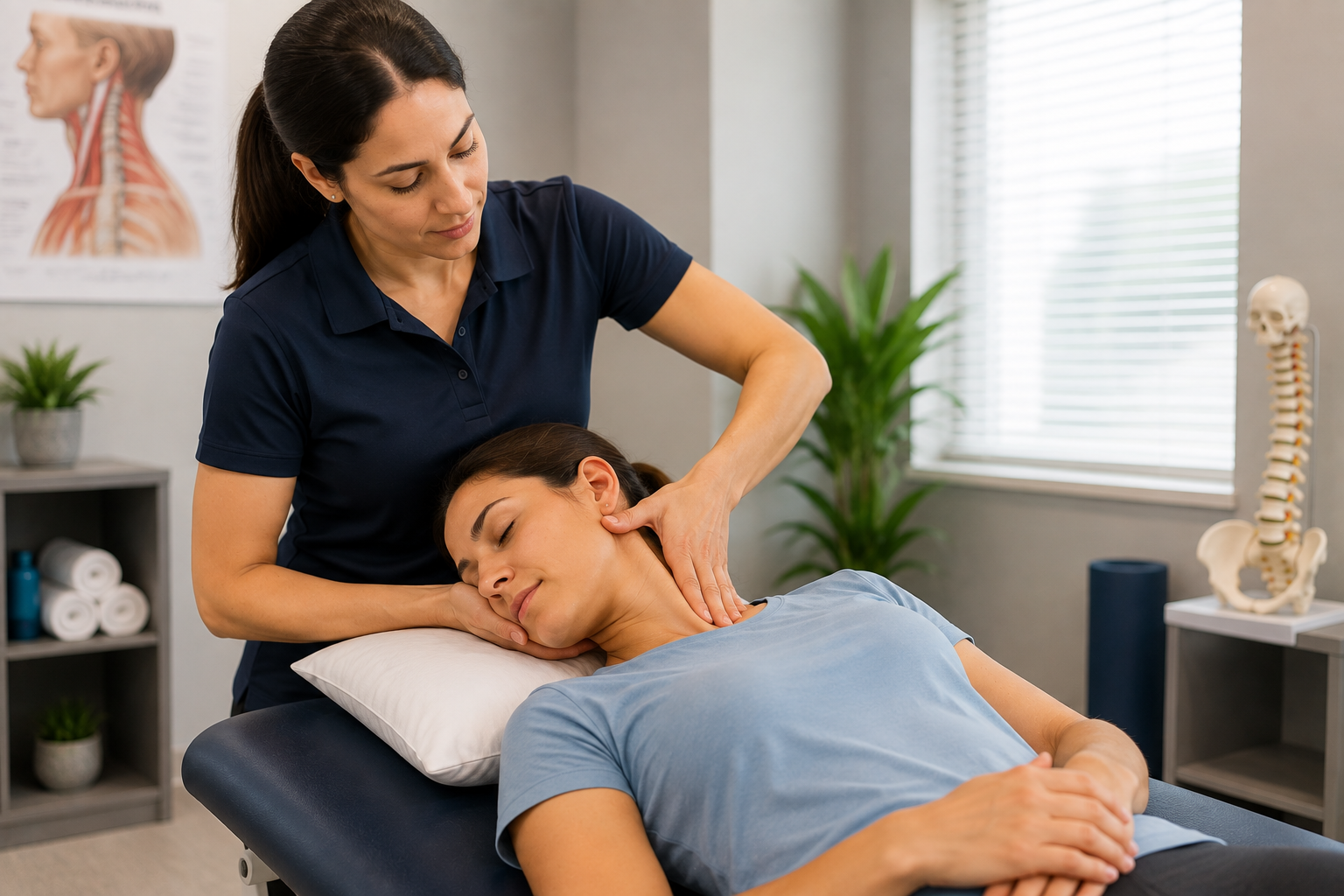
Vestibular rehabilitation is a focused form of physiotherapy for people experiencing dizziness, vertigo, poor balance, unsteadiness, or sensitivity to motion.
The vestibular system includes structures within the inner ear and connections in the brain that help manage:
Vestibular rehabilitation may help people of different ages and activity levels, including:
BPPV can cause brief spinning when rolling in bed, sitting up, bending forward, or looking upward. Treatment may include guided head and body positioning to help settle the inner-ear crystals behind the symptoms.
Irritation of the inner ear or vestibular nerve can cause sudden dizziness, nausea, poor balance, and walking difficulty. Rehabilitation focuses on improving steadiness and your tolerance to head movement over time.
Vestibular migraine can cause dizziness, motion sensitivity, nausea, or visual discomfort, sometimes without a headache at all. Exercises may help improve balance and reduce sensitivity to movement and busy surroundings.
Concussions and motor vehicle accidents can affect signals from the eyes, inner ear, neck, and brain. Treatment may address dizziness, blurred vision, motion sensitivity, and neck stiffness that make it harder to return to work or activity.
Neck stiffness, whiplash, or muscle tension can contribute to dizziness. Care may include neck mobility work, balance exercises, posture support, and gentle strengthening.
Some patients feel rocking, swaying, or dizziness in grocery stores, malls, crowds, or while scrolling on a phone. Rehabilitation gradually builds tolerance to movement and visual activity.
Car rides, elevators, escalators, or quick head movements can cause nausea or dizziness for some patients. Gradual movement exercises help the body become less sensitive over time.
Reduced strength, slower reactions, and balance changes can increase fall risk. Treatment may include walking practice, balance training, strengthening, and confidence-building exercises.
Ménière’s disease can cause vertigo, ear pressure, and imbalance that comes and goes. Rehabilitation focuses on improving stability during the periods between episodes.
Balance can shift after an illness, a period of inactivity, or a surgery unrelated to the ears. Rehabilitation supports safer walking, head movement, and a return to daily activity.
The techniques selected for you depend on your symptoms, triggers, balance, movement, and daily goals.
When your symptoms are consistent with BPPV, your physiotherapist may use guided repositioning movements. These carefully guided head and body positions help shift loose particles within the inner ear toward an area where they are less likely to trigger spinning. Your physiotherapist assesses your symptoms first to confirm this approach is a good fit before beginning.
Gaze stabilization exercises help your eyes stay focused while your head is moving. They can support patients dealing with blurred or bouncing vision, dizziness while walking, difficulty focusing during head turns, or discomfort in visually busy places.
Habituation involves gradual, repeated exposure to movements or visual situations that trigger manageable symptoms. Over time, your brain becomes less sensitive to these triggers, and dizziness starts to feel less disruptive in daily life. Your physiotherapist paces this exposure carefully so symptoms stay controlled rather than overwhelming.
Balance exercises may include standing with different foot positions, turning, reaching, stepping, or moving over different surfaces. Each activity is adjusted to your ability, safety, comfort, and goals, so your training progresses at a pace that works for you.
Walking exercises build on your balance work with head turns, direction changes, varied speeds, uneven surfaces, obstacle navigation, and dual-task activities. These exercises help connect your balance improvements to real-life movement, from a walk around the block to navigating a busy store, so gains made in the clinic carry over into your everyday routine.
Leg weakness, neck stiffness, limited ankle movement, or reduced core control can all affect your balance. Strengthening and mobility work is included where needed to support steadier standing, walking, and daily activity, and it is often paired with the balance and gait exercises above rather than treated as a separate routine.
When neck stiffness or muscle tension is contributing to your dizziness, manual therapy is often added to your plan. Hands-on joint mobilization and soft tissue work through the neck and upper back can ease that tension, improve neck mobility, and make the rest of your vestibular exercises more comfortable and effective.
Vestibular recovery tends to unfold in stages, and your program is adjusted as your brain and body adapt to each phase
identifying your triggers, such as rolling over in bed or turning your head sideways quickly, and starting gentle exercises within a manageable comfort range, so your body is not pushed past what feels safe.
building tolerance to head movement, walking, and busy visual environments like grocery stores or traffic, as your balance and gaze control respond to treatment.
strengthening and confidence-building exercises tied to the activities that matter most to you, whether that is returning to work, driving, sport, or exercise without hesitation.
regular check-ins so your program adjusts as your symptoms, balance, and daily demands change, since vestibular recovery rarely follows a straight line.
Here is what you should know about coverage before your first visit: Accordion:
Here is what to expect when you choose our physiotherapy clinic for vestibular rehabilitation in Calgary:
A detailed vestibular assessment of your symptoms, balance, eye movements, walking, and neck mobility to identify possible contributing factors.
Care plans built around your symptoms, comfort, daily life, and goals, not a routine that looks the same for every patient.
Support that may include balance training, gaze exercises, movement practice, manual therapy, strengthening, and home guidance.
A calm, supportive setting, since dizziness can feel worrying, and our team explains each step and adjusts treatment at a manageable pace
Practical goals focused on safer walking, driving, working, and daily movement

Google Ratings
Based on 302 Reviews
Dizziness, vertigo, and balance problems can affect more than movement. They can change how you work, sleep, walk, drive, shop, and feel in your own body, and you do not have to keep avoiding movement or living with the fear of another dizzy spell.
At East Hills Physiotherapy, vestibular rehabilitation Calgary is built to help reduce dizziness, improve balance, support safer movement, and rebuild your confidence in daily life. If dizziness or unsteadiness has been holding you back, reach out to East Hills Physiotherapy today to book your assessment.
Call our East Hills Physiotherapy clinic or request an appointment online, and let’s work together on steadier, more confident days.

PT/Clinic Director

Physiotherapist

Physiotherapist
Vestibular rehabilitation in Calgary is physiotherapy for dizziness, vertigo, poor balance, motion sensitivity, and frequent falls. Care may include gaze exercises, balance training, head movements, walking practice, and home guidance.
Vestibular rehabilitation helps the brain, eyes, inner ear, muscles, and joints work together more smoothly. It may reduce dizziness, improve balance, support steadier walking, and build confidence during daily activities.
The vestibular system includes structures within the inner ear and brain connections that help control balance, head position, eye movement, and spatial awareness while you stand, walk, turn, bend, or move.
Yes. Vestibular rehabilitation is a focused area of physiotherapy for dizziness, vertigo, motion sensitivity, unsteadiness, and balance concerns. Treatment uses exercises and movement strategies chosen around your symptoms and daily needs.
Vestibular rehabilitation at East Hills Physiotherapy is provided by physiotherapists who assess dizziness, balance, eye movement, walking, neck mobility, and symptom triggers before creating a care plan around your goals.
People often search for vestibular rehabilitation near me when dizziness, vertigo, unsteadiness, motion sensitivity, or frequent falls begin affecting walking, driving, working, shopping, exercising, sleeping, or confidence during daily movement.
Dizziness while rolling in bed may be linked to BPPV, which can cause brief spinning with head position changes. A vestibular assessment can help determine whether repositioning movements may be suitable.
A spinning feeling when lying down can happen when inner-ear balance signals become disrupted. BPPV is one possible cause, especially when symptoms also appear while rolling, sitting up, bending, or looking upward.
You may feel unsteady without spinning when balance, vision, strength, neck movement, or walking control is not working together smoothly. Vestibular physiotherapy may help improve stability, movement confidence, and walking control.
Dizziness with head turning may relate to vestibular irritation, motion sensitivity, neck-related symptoms, concussion changes, or visual mismatch. Your physiotherapist can assess how your eyes, head, neck, and balance respond.
Grocery stores can trigger dizziness because of bright lighting, moving people, patterned floors, long aisles, and visual overload. Vestibular rehabilitation may gradually improve your tolerance to busy surroundings and visual motion.
Scrolling may trigger dizziness when your visual and vestibular systems are sensitive to moving images. Care may include visual-motion exercises, gaze training, pacing strategies, posture guidance, and gradual screen exposure.
Dizziness after driving may relate to motion sensitivity, visual overload, neck tension, migraine-related symptoms, concussion changes, or vestibular irritation. An assessment can help identify which factors may be contributing.
Vestibular rehabilitation may help with vertigo depending on the cause. BPPV may respond to repositioning movements, while other concerns may require gaze exercises, balance training, motion practice, walking support, and home activities.
Yes. BPPV may respond to guided repositioning movements that help shift loose inner-ear particles into a less sensitive area. Your physiotherapist first reviews your symptoms and position-related responses before treatment.
Vestibular rehabilitation may support people with vestibular migraine by improving balance, gaze control, movement tolerance, and visual sensitivity. Care may also include pacing, trigger awareness, and gradual exposure to daily activities.
Vestibular rehabilitation may support dizziness after a motor vehicle accident when whiplash, neck stiffness, visual sensitivity, guarded movement, or concussion-related symptoms affect balance, walking, driving, work, or daily activity.
Vestibular rehabilitation may help when frequent falls are linked to balance changes, dizziness, weakness, reduced reactions, vision concerns, or walking difficulty. Care may include balance retraining, strengthening, gait practice, and fall-prevention guidance.
Neck-related dizziness may improve with care that includes neck mobility, posture guidance, manual therapy, balance exercises, and gradual movement practice. Your physiotherapist reviews both neck function and balance responses before planning care.
During gait analysis, your physiotherapist observes how you walk, turn, stop, start, and shift weight. We assess step length, foot placement, posture, balance, strength, mobility, footwear, and walking speed carefully.
Some exercises may briefly bring on mild dizziness because they challenge the balance system. Your physiotherapist keeps symptoms manageable, adjusts the pace, and explains how long any temporary response should last.
Wear comfortable clothing and supportive shoes because you may be asked to walk, turn, balance, move your head, or change positions. Clothing that allows easy movement helps make assessment and exercise more comfortable.
Bring a list of symptoms, medications, recent falls, migraine history, previous injuries, medical reports, and questions. This information helps your physiotherapist understand your dizziness, balance concerns, and daily limitations more clearly.
Some people feel comfortable driving after treatment, while others may feel temporarily dizzy or tired. When symptoms are strong or unpredictable, arranging transportation for your first appointment may be a sensible precaution.
Session length depends on whether you are attending an assessment or follow-up. A visit may include testing, repositioning movements, gaze exercises, balance work, walking practice, education, and home exercise guidance.
Vestibular rehabilitation may include gaze stabilization, balance retraining, habituation, head movement practice, walking drills, repositioning movements for BPPV, strengthening, neck mobility, and home exercises chosen around your symptoms.
Gaze stabilization exercises train your eyes and head to work together so vision stays clearer during movement. They may help with blurred vision, dizziness while walking, and difficulty focusing during head turns.
Habituation exercises use repeated, controlled exposure to movements or visual situations that trigger manageable symptoms. Over time, your brain may become less sensitive, helping those activities feel less disruptive and easier to tolerate.
Balance retraining uses gradual exercises to improve standing control, walking confidence, turning, stepping, and fall prevention. Activities may be changed according to your age, comfort, ability, safety, and personal goals.
The Epley maneuver is a repositioning technique commonly used for certain forms of BPPV. It helps guide loose inner-ear particles toward an area where they are less likely to cause spinning.
Many vestibular exercises can be completed at home after your physiotherapist shows you how to perform them safely. Your program is adjusted according to symptom response, balance ability, progress, and daily routine.
Vestibular rehabilitation can be safe when guided by a physiotherapist after an assessment. Exercises are selected according to your symptoms, health history, balance ability, comfort, fall risk, and daily movement goals.
Seek urgent care when dizziness occurs with sudden weakness, facial drooping, slurred speech, fainting, chest pain, double vision, sudden hearing loss, a severe new headache, or sudden difficulty walking safely.
Some people improve within a few visits, particularly with BPPV, while others need longer care for migraine-related dizziness, concussion symptoms, motion sensitivity, or ongoing imbalance. Progress depends on symptoms and response.
Some vestibular symptoms may improve with time, but ongoing dizziness, vertigo, unsteadiness, or falls should be assessed. Vestibular rehabilitation may help reduce symptoms and support safer movement during everyday activities.
Some people notice temporary dizziness or fatigue after exercise, particularly early in care. These responses should remain manageable and short-lived, and your physiotherapist can reduce difficulty when symptoms feel too strong.
Exercise frequency depends on your condition, triggers, balance, and symptom response. Your physiotherapist provides clear instructions about how often to practise, when to rest, and when to reduce or progress activities.
Vestibular rehabilitation may improve walking confidence by training balance reactions, gaze control, head movement tolerance, lower-body strength, and stability across different surfaces, speeds, turns, obstacles, and everyday environments.
Vestibular therapy may reduce fear of falling by improving balance reactions, strength, walking control, and confidence with daily movement. Care may also include practical fall-prevention strategies for home and community activities.
Many people continue working while receiving vestibular rehabilitation. Your physiotherapist may suggest pacing, screen breaks, posture changes, reduced visual exposure, movement strategies, or temporary adjustments when symptoms affect your duties.
Driving may not be safe when spinning, blurred vision, imbalance, or dizziness is active or unpredictable. Avoid driving during strong symptoms and discuss your situation with an appropriate healthcare provider before resuming.
Vestibular rehabilitation may help screen-related dizziness through gaze exercises, visual-motion training, gradual exposure, pacing, posture guidance, and movement breaks. The program is adjusted according to your tolerance and work needs.
Vestibular rehabilitation may help older adults improve balance, walking safety, strength, fall confidence, and daily function. Exercises are adapted to comfort and ability while focusing on practical movement around the home and community.
Many extended health plans may cover vestibular rehabilitation when provided within physiotherapy care. Annual limits, visit amounts, referral requirements, eligible services, and direct billing options vary between individual insurance policies.
Direct billing may be available for participating insurance plans, depending on your provider, policy, and clinic arrangements. Bring your insurance details so our administration team can review the available billing options.
You generally do not need a physician referral to book vestibular rehabilitation in Calgary. However, some insurance plans may require one before reimbursing physiotherapy costs, so check your policy before attending.
Yes. Many people book because they feel dizzy, unsteady, or off balance without knowing the cause. Your physiotherapist can assess symptoms, triggers, eye movement, balance, neck mobility, and walking.
East Hills Physiotherapy provides personalized vestibular care based on your symptoms, balance, vision, walking, neck movement, comfort, and goals. Treatment may include repositioning movements, gaze exercises, strengthening, balance training, and home guidance.
Contact East Hills Physiotherapy by phone or use online booking when available. Share your main symptoms, preferred Calgary location, schedule, insurance information, and whether your dizziness followed an accident or concussion.
Aanchal and Ramesh are awesome. Recovery from a broken ankle. They made it feel like it had never happened. Thank you
I appreciate the whole crew. Ramesh was great he has been helping me recover from broken ankle surgery. The associates are really helpful.
When i came here everybody treated me like Family. Harman helped me a lot. Earlier, i could not move my shoulder up but now all the pain is gone.Highly recommended place.
I saw Aanchal Badhwar for pelvic floor physio and I am very happy with my results. She took the time to educate me on my condition and discussed various approaches to suit my needs. I have also referred other family and friends to her because not many people know about this hidden gem. The front desk staff is always smiling and prompt with any changes needed to my appointments.
Great experience! Highly recommend clinic! I had received different sessions of chiropractic and Love it! Feeling way better! Also Im still getting physiotherapy with Anchal and each session is so good, Im so grateful for the treatment, as well the girls at front are very friendly and respectful. Love this place!